abc

Author: Marshal@008

  • Alternate US Colleges and Why You Should Consider Them

    Alternate US Colleges and Why You Should Consider Them

    Best Alternative Colleges in the US & Why Should Consider Them?


    Alternative US Colleges to Consider in your Search

    Ever thought of attending a university where you don’t receive letter grades, but instead narrative evaluations from your professors, or one where you get to voice your opinion without thinking twice?

    Introducing ‘Alternative Colleges’. Unknown to most international students, the student body from these colleges welcome students from all ethnicities, races, gender, sexuality with open arms. These colleges are non-conforming and follow uniquely designed curriculums, that can only be termed ‘liberal’ and ‘liberating’.

    Here’s a list of colleges you could consider:

    1) Pitzer College, California

    Part of the Claremont Consortium, Pitzer is one of the most reputed alternative colleges. A small liberal arts college with just over 1,000 undergraduate students, it is known for its “progressive thought, social responsibility, environmental sustainability, and open social attitude.”

    Pitzer is the first in the country to offer a Secular Studies major, which includes courses on God, Darwin, and Design. The community government makes decisions on faculty promotion and curriculum. Individualism is treasured here, sometimes fiercely. In the 1970s, Pitzer students saved a California craftsman-style house from a wrecking ball and moved its pieces to campus. It now serves as a study space and restaurant for students.

    2) Oberlin, Ohio

    Named as the college that invented non-conformity, you’ll find the annual Drag Ball an experience. It is the first college to accept women and minorities. Oberlin Conservatory of Music is one of the best performance schools. EXCO, the Experimental College offers townspeople and students the chance to learn together. You will find students talking about anything ranging from Japanese woodblock prints to Russian cinema. Social activism is huge. Oberlin College and Conservatory

    3) Hampshire College, New York

    Students design their own interdisciplinary concentrations and projects. Part of the five-college consortium with Amherst College, UMass Amherst, Smith College, and Mount Holyoke. The Kern Center looks into building environmental sustainability, making the campus 100% solar-run. The best part is that you don’t get graded on your exams, instead, your professors provide you with ‘narrative evaluations’ (written evaluations and critiques). Along similar lines, students don’t give tests but are expected to submit portfolios, evaluations, and self-reflections on academic development. No wonder they refuse to accept SAT/ACT scores.

    The most unique feature of this college is the ‘Division System’ which ensures that there are as many curricula as students, on campus, each one curating their own with the help of faculty advising. Hampshire College | Hampshire College

    4) Sarah Lawrence, New York

    For those who love writing, Sarah Lawrence is the place to be. You’ll get a ‘don’, a professor specifically assigned to mentor you through your college years. Academics are mostly independently procured, so you’ll need to be self-driven and independent. Writing, Literature, Visual Arts, Filmmaking, and Psychology are popular majors. They have a great premed program along with strengths in the CS department. Professors meet their designated students weekly or biweekly following Oxford University’s tutorial system, ensuring students don’t fall behind. ‘Conference Work’, or research is nearly done by all students under the supervision of their ‘don’. SL is high on student activism and you’d rarely ever meet a conservative on campus. Welcome to Sarah Lawrence College

    5) Reed College, Oregon

    Quirky intellectualism – two words that describe Reed students. Steve Jobs attended a semester here before dropping out and going ahead to found Apple.

    It follows the Honors Principle, similar to Quaker colleges. Students receive lengthy commentaries in the form of evaluations. Has the highest percentage of grads from a liberal arts college opting for PhDs in the future.

    ‘The Multicultural Resource Center’ celebrates student and teacher diversity through events, lectures, etc. There are six ‘language houses’ and each gets a native speaker. ‘Paideia’ is a weeklong program of non-credit, alternative classes such as how to speak with a French accent to the history of Batman. Tons of students participate in SEEDS (Students for Education, Empowerment, and Direct Service). Reed College

    6) Bard College, New York

    Known for its non-conformism, freshmen arrive three weeks before classes start for a ‘Workshop in Language and Thinking’. ‘Citizen Science’ is a unique 3-week workshop where students learn about topics like infectious diseases and teach these to the students in local schools. Bard conducts ‘Moderation’, a performance review in the middle of the year, where a panel of professors assesses and provides feedback. Photography is the toughest major to get into but is also known for programs like Languages and Literature, Visual and Performing Arts, Human Rights, CS, Biology (similar to Sarah Lawrence).

    Students can also devise their syllabus from their tutorial and find a professor to sponsor it. Also, Bard allows you to take an Entrance Examination where students demonstrate their academic ability by submitting four 2500-word essays that get graded by profs.

    Apart from these, other alternative colleges are Hamilton College, Occidental College, and Prescott College.

    If you’d like to design your path, need extensive teacher support, love student activism, are non-conforming, or have unique interests, do consider these amazing alternative colleges where you’re driven to make a change!
    All You Need to Know About Bethany College

  • Top Summer Programmes: Simons Summer Research Program

    Exploring About Simons Summer Research Program | Ivy Central

    Simons Summer Research Program

    The Simons Summer Research Program at Stony Brook University is an outstanding opportunity open to US citizens and permanent residents attending high school who are interested in pursuing careers in science, mathematics, and engineering. This programme provides participants with hands-on experience in research and exposure to the culture of scientific inquiry.

    Overview of the Program

    The Simons and Lumiere Summer Research Program is designed to provide an immersive research experience to high school students who have demonstrated exceptional talent in science, mathematics, or engineering.

    Running for seven weeks during the summer, from late June to mid-August, students work on a research project under the guidance of a Stony Brook University faculty mentor. What makes Simons stand out from other STEM research summer programmes is that Simons Fellows (accepted students) can choose to identify a member of faculty who is conducting research into an area they are interested in and ask them to act as their mentor for the duration of the program. Participants attend seminars, workshops, and social events that provide opportunities to network with other students, faculty, and researchers.

    The focus for the 7 weeks that the program runs, is hands on work based in a lab, often working alongside graduate students and faculty members. During the program, the Fellows work to undertake original research on the cutting edge of the field they are working in. They get to know how to undertake research at a university level which will hopefully prepare them for the work they will undertake as an undergraduate and progress into careers in science. In addition to working on their research, Fellows will also attend seminars, take part in weekly research workshops, and join social events that provide opportunities to network with other students, faculty, and researchers.  In addition, there are also trips to see other research labs and talk to the people working in their field of interest. At the end of the programme, there is a poster symposium where the Fellow’s present their work to the rest of the program, faculty members, and guests, including their families.

    Entry Requirements and Cost

    Applicants must be in their Junior year at the time of applying and are currently enrolled in high school in the United States or its territories, or are US citizens studying abroad. Students who have completed their junior year and are at least 16 years old are eligible to apply.

    There are no tuition costs for attending the programme, however, Fellows must fund costs for transportation, on-campus dining, and accommodation. On completion of the poster symposium, students are presented with a stipend which can help cover costs incurred.

    How to Apply

    The program is highly competitive, and students are selected based on their academic achievements, personal statements, and letters of recommendation. The program has a limited number of spots available, and only the most qualified applicants are accepted.

    Unlike most other Stanford summer programs, to apply to become a Simons Fellow you have to first be nominated by your school. As each school is only able to nominate two students per year, it is likely that whoever is nominated is going to be one of the top science students in Grade 11. In addition to the school nomination, applicants will also need to complete an online application form, which needs to be completed in one sitting and takes up to four hours. Additional requirements for the application are recommendations from two maths/science teachers, and your official transcript, ideally, this will include grades for the first part of Grade 11, but these can be submitted later if not available when you apply.

    Finally, there are several short-answer questions and essays that you need to complete. Many people find the short-answer questions the most challenging part of the process. Students applying in 2022 had seven questions covering things like, ‘Why do you want to participate in SSRP?’ or ‘Briefly summarize any previous research experience’. The challenge is that there is a 700-character limit for each question.

    Deadline & Notification

    • Application Deadline: Mid-February (Typically around Feb 14–17)

    • Decisions Released: Mid-April

    Competitiveness and Types of Students Accepted

    Accepting around 40 Fellows per year and with an acceptance rate of approximately 8%, the Simons Summer Research Program is highly competitive. While Simons states that prior research experience is not a requirement for acceptance into the program, it is true to say that most accepted individuals will have participated in some form of research activity. It may be working in a lab alongside a mentor, or an independent research project where you have planned and undertaken your own research activity.

    Final Words

    The Simons Summer Research Program is an excellent opportunity for students interested in science, mathematics, and engineering to gain hands-on experience and explore potential career paths. It provides a unique opportunity to work with world-class researchers and gain exposure to the culture of scientific inquiry. Successful applicants tend to be highly motivated, academically accomplished students with a passion for research and a strong interest in pursuing a career in science, mathematics, or engineering.

    Working with study abroad consultants, overseas education consultants, or, as more commonly known, college counsellors, can help you plan ahead and make those high school years count. Ivy Central offers exceptional focus to help you prepare for college admissions throughout the high-schooling years. Start today!

  • Math Competitions You Can Participate In

    Math Competitions You Can Participate In

    Premium Vector | Math course concept

    Math Competitions

    Students who are interested in pursuing a STEM field in college should showcase a rigorous and competitive profile by the end of high school. Math competitions can be one of the ways to show your passion in a STEM subject.

    Math competitions can help spark interest in mathematics and inspire students to learn more about the subject. They provide an opportunity for students to showcase their skills and talents in a competitive environment. Competitions usually feature complex and challenging problems. Participating in these competitions can help you develop and improve your creative thinking and problem-solving skills.

    Math competitions not only help build your confidence, but they also help improve your collaborative skills. When the students participate in a team competition they get an opportunity to solve complex problems by communicating effectively.

    Many competitions can also help you gain admission to top colleges and universities or lead to scholarships and awards.

    Here is a list of some international math competitions that can help you thrive and pursue your passion in math:

    The American Math Competition (AMC) is an initial exam in high school mathematics in the United States. The competition identifies the best students in each country and serves as the first level of the International Mathematics Olympiad. Administered by the Mathematical Association of America (MAA), this test is attempted by numerous students globally and assesses their critical thinking, problem-solving, and computational abilities. It also provides a pathway for students aspiring to pursue STEM courses in the future.

    Archimedes Math Competition gives every high school student a chance to experience Mathematical Olympiads. The students are compared to other students within their region. The competition consists of 2 main contests and a training camp.

    Cantor Dust Math Tournament is an international online mathematics team event. This unique competition has been designed in order to test your mathematical problem-solving skills and find the best brains in the field of mathematics.

    inteGirls as the name suggests, is a girls-only math competition. The virtual math competition consists of individual and team math competition rounds and fun STEM-related activities!

    Math Kangaroo (also known as International Mathematical Kangaroo or Kangourou sans frontières in French) is an international mathematical competition that was established in 1991 by André Deledicq, a professor of mathematics at the University of Paris 7, and Jean-Pierre Boudine, professor of mathematics at Marseille. Over 92 countries are represented in the competition. There are twelve levels of participation, ranging from grade 1 to grade 12. The questions focus on not just the pure knowledge of formulas but the logical and creative thinking of participants.

    Online International Math Challenge aims to encourage students to study and excel in math and critical thinking skills. It is one of the leading mathematics-based competitions for various grades of school age in the world. And promotes international-mindedness and global perspectives among students.

    The Canadian Senior and Intermediate Mathematics Contests (CSMC and CIMC) are two contests conducted by The University of Waterloo. The contests are designed to allow students to have fun and develop their mathematical problem-solving abilities.

    The International Mathematical Olympiad (IMO) is the World Championship Mathematics Competition for High School students and is held annually in a different country. The first IMO was held in 1959 in Romania, with 7 countries participating. It has gradually expanded to over 100 countries from 5 continents. The IMO Board ensures that the competition takes place each year and that each host country observes the regulations and traditions of the IMO.

    Math competitions provide a platform for students to showcase their mathematical skills, develop problem-solving abilities, build confidence, foster teamwork, and open doors to further opportunities.

  • Test Optional and Test Blind for Admission Cycles

    Test Optional and Test Blind for Admission Cycles

    Understanding Test Optional and Test Blind for Admission Cycles


    To Test or Not to Test in 2023-24?

    What Does it Mean to be Test-Optional (2023-24)?

    Many Universities in the US are remaining Test-Optional for the upcoming application season (2023-24). Recently, Columbia University was the first Ivy League to no longer require SAT/ACT testing as of 2023-24 and will be test-optional permanently. Many Universities & Colleges across the US are continuing with their test-optional policy in 2023-24, with only a handful confirming that they will resume testing policies for 2023-24.

    Would you benefit from submitting a score to a test-optional university?

    It depends; you should submit your score if it falls in the top 25th percentile of admitted students to that college in the previous year. On the other hand, if you have a lower score you should work hard to enhance your profile with good quality extra-curricular activities, recommendation letters, college application essays, and your school GPA. The universities focus on a holistic review while selecting a diverse group of an incoming undergraduate class. The students will not be disadvantaged if they do not submit their test scores(yippee).

    Prioritize Academic Fit When Choosing a College or University

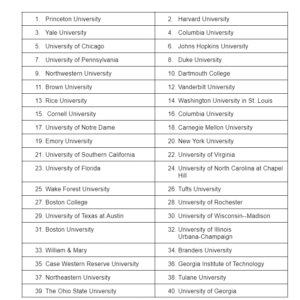
    Here is a list of some Top research universities that are test optional for the 2023-2024 admissions cycle:

    Understanding Test Optional and Test Blind for Admission Cycles

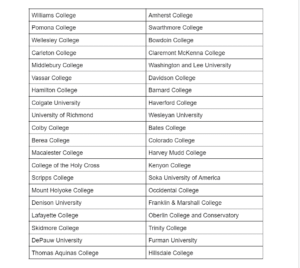
    Here is a list of some Top Liberal Arts Colleges that are test-optional for the 2023-2024 admissions cycle:

    Some Liberal Arts Colleges and Universities Mandate SAT/ACT Testing

    There are some top universities and liberal arts colleges that require you to submit your SAT/ACT scores. Some of the schools that still require testing include Massachusetts Institute of Technology, Georgetown University (DC),  Georgia Institute of Technology, University of Florida, University of Tennessee, Knoxville, New College of Florida, Fisk University (TN), and New College of Florida.

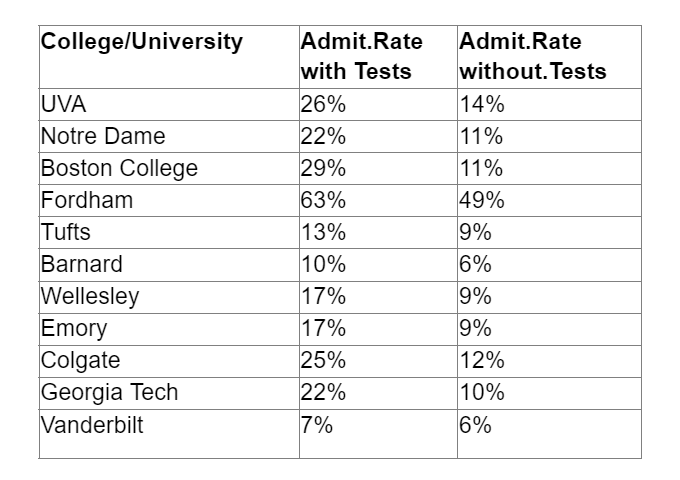
    With insights provided by education writer Jeff Selingo and information from various colleges and universities, we have created the following table to give you an overview about submitting test scores.

    On the face of the above information, it would appear that including a test score greatly increases your chances of acceptance. However, Common App data reported a 20% surge in applications which suggests that they are receiving applications from students that might have been put off applying when a test score was a requirement.
    Read More: Public versus Private Universities

    Were you aware that some universities have adopted a “test-blind” approach?

    Test-blind means that a college or university will not consider your SAT/ACT score as part of their evaluation process, even if you submit it. The University of California, for example, would only use your scores for course placements after you enroll.

    Here is a list from FairTest of some universities and colleges that are test-blind:

    • California Institute of Technology

    • California State University system (permanently at all 23 campuses)

    • Cornell University (through fall 2024 at the schools of Agriculture, Architecture, and Business)

    • City University of New York system (11 campuses, extended through Spring 2023 admissions)

    • University of California system (9 campuses)

    • Washington State University (4 campuses)

    • University of San Diego

    Is your high school profile competent enough or do you need to submit your score to the test-optional universities? If you need further guidance contact the Ivy Central team.

  • What You Need To Know About Brown University

    What You Need To Know About Brown University

    10 Facts about Brown University - Fact File

    All You Need to Know About Brown University

    Overview

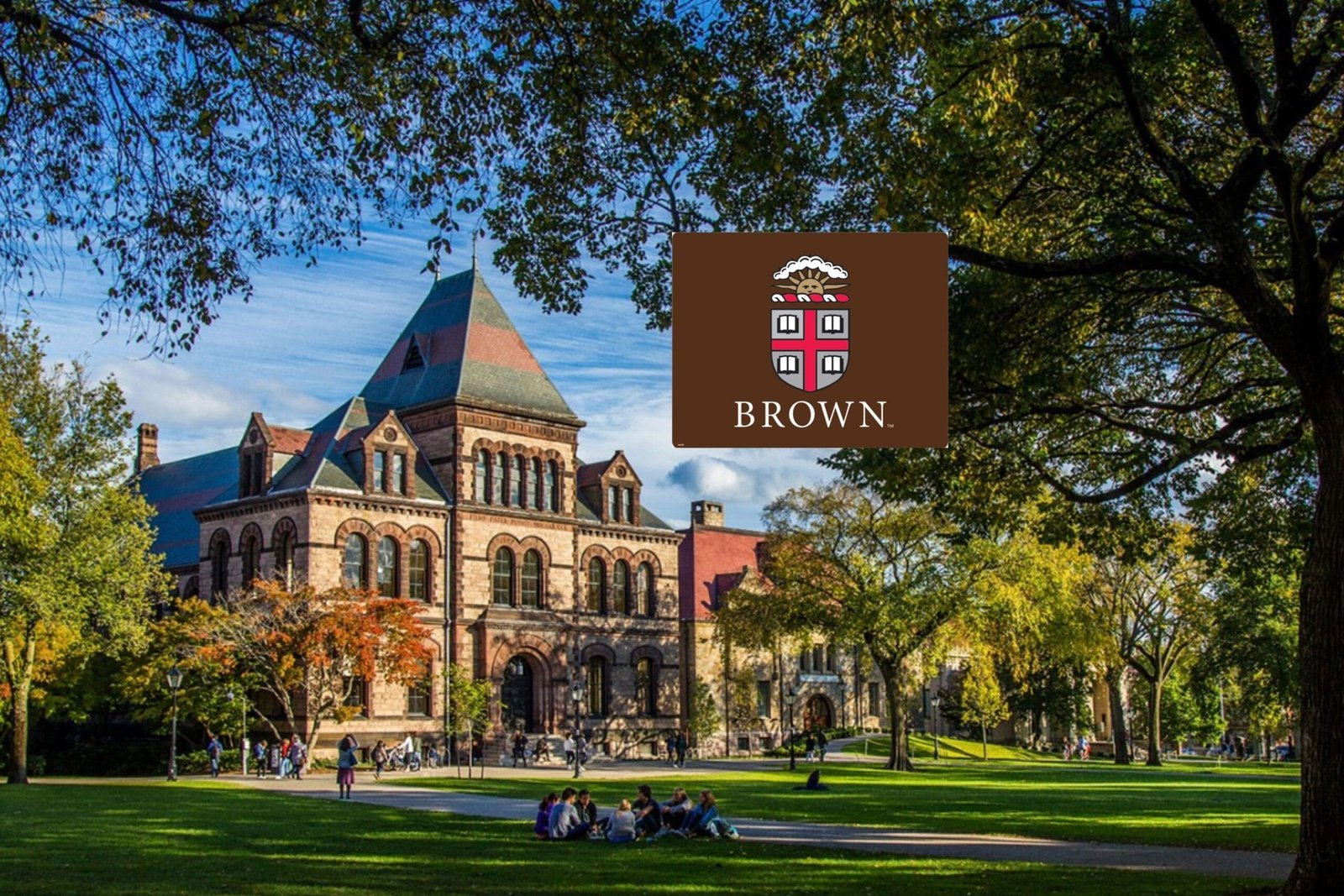
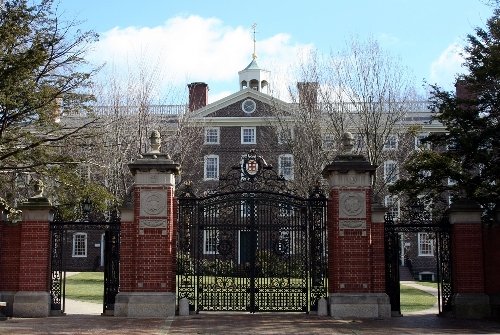
    Brown University is a private Ivy League research institution located in Providence, Rhode Island. Founded in 1764, Brown is the seventh-oldest college in the United States and has a long-standing reputation for academic excellence.

    • Location:

    Brown University is located in Providence, the capital of the smallest US state, Rhode Island. Known for its rich cultural history, vibrant arts scene, that is supported by the large student population in the city. Providence is easily accessible by car, bus, train, or plane, being situated approximately one hour away from Boston and three and a half hours from New York.

    • Student Cohort Size:

    Brown has a total undergraduate enrolment of approximately 7,500 students, making is one of the smaller Ivy League colleges, midway between Dartmouth and the smallest, Princeton. Add the students pursuing one of the university’s graduate programs, and the total college enrolment is approximately 10,000 students.

    Approximately 10% of Brown University’s undergraduate population is made up of international students from over 100 countries. Considered to be something of a bastion of political correctness, the diverse student body brings a wealth of experiences and perspectives to the university community.

    Admission

    • Acceptance Rate:

    Brown University’s acceptance rate for the class of 2025 was 5.4%. This is one of the lowest acceptance rates in the country and demonstrates the high level of competitiveness among applicants.

    • Acceptance GPA:

    The average GPA of accepted students for the class of 2025 was 4.08 on a 4.0 scale, reflective of the high academic standards at Brown University and the rigorous coursework required for admission.

    • Types of Admission:

    Brown University offers two types of admission: Early Decision and Regular Decision. Early Decision, (ED) is a binding agreement, meaning that if a student is accepted, they are required to attend Brown University. Applying ED can improve your chances of acceptance but you need to be absolutely sure you want to go to Brown as you will not be allowed to apply to any other colleges. Regular Decision, (RD) is non-binding, allowing students to compare financial aid offers from multiple universities before making a final decision. Application dates are 1st November for ED and 5th January for RD.

    • Additional Admissions Requirements:

    In addition to the standard application materials (transcripts, test scores, essays, etc.), Brown University requires applicants to submit graded written work from a humanities or social sciences course, as well as a recommendation from a teacher in a core academic subject. Currently Brown is test optional, meaning that you can choose to submit SAT or ACT scores, but you will not be considered less favourably if you don’t. Brown doesn’t offer or require students to interview.

    Read More: Yale University Acceptance Rate

    Academics

    Brown University offers over 80 undergraduate majors, ranging from Anthropology to Visual Arts. Brown is the only Ivy offering an Open Curriculum meaning that there are no distribution requirements or core that students need to follow to graduate. Instead, students can explore their interests and passions by designing their own academic programme. The freedom to set their own studies can be liberating for students, but they need to be mature, self-confident and use their own initiative to make the most of it. Students receive support through the ‘Advising Programme’ which covers both academic and personal advice including in dorms.

    • Standout Concentrations:

    Brown offer ‘Concentrations’ which are Majors under a different name. While all of the programmes offered at Brown are considered ‘strong’ Brown is particularly regarded for its concentrations in the humanities and social sciences, including English, History, Political Science, and Sociology. Additionally, the university’s programs in the life sciences, such as Neuroscience and Molecular Biology, are highly regarded. It also offers its Program in Liberal Medical Education, (PMLE), an eight year combined undergraduate and medical school education.

    • Faculty/Student Ratio:

    With a faculty/student ratio of 1:7, students attending Brown have ample opportunities to work closely with professors and engage in meaningful research and academic discussions. Having such a low faculty/student ratio, results in approximately 70% of classes having fewer than 20 students in them.

    • Four-Year Completion Rate:

    The four-year completion rate for Brown University is approximately 86%, which is higher than the national average. This demonstrates the university’s commitment to providing a supportive and engaging academic environment that fosters student success.

    • Cost of Attending:

    The cost of attending Brown University comes in at approaching $85,000, made up of tuition and fees, room and board, books and other expenses. Currently, Brown is only need blind for domestic students, however, they have recently announced that they will extend this to international students starting courses in the fall of 2025.

    In conclusion, Brown University is a highly competitive and prestigious institution known for its academic rigour, diversity and inclusion student body, and commitment to innovation and excellence. With a wide range of majors, a supportive faculty, and a commitment to student success, Brown University offers an unparalleled academic experience for those seeking a challenging and rewarding educational journey.

    Working with study abroad consultants, overseas education consultants, or, as more commonly known, college counsellors, can help you plan ahead and make those high school years count. Ivy Central offers exceptional focus to help you prepare for college admissions throughout the high-schooling years. Start today!

  • Public Vs Private

    Public Vs Private

    What Is the Difference Between Public and Private Universities?

    Differences

    The simple difference between Public and Private Universities is that Public universities are paid for by the state’s taxpayers and private universities run on endowments from alumni etc. This changes the way resources are allocated, and mainly the way students get admitted. For all public universities, the Common Data Set would say that the criteria for admission for state residency are “very important”. The simple logic to this is that public or state universities, given that they are funded through resident taxes, prioritize local or domestic students over out-staters or international applicants. Therefore, most public universities will have about 2%(such as at U.Maryland) to 8% International students.

    For the purpose of this blog, let’s consider differences under these sub-headings – financial, academic, and social.

    Financial Differences: Cost of Attendance

    Attending a public university can be really affordable if you qualify as an in-state student. Even international students do not need to spend exorbitant amounts of money as opposed to what they would at a Private University. The reason again being that private unis run on student tuition and heavy endowments.

    Academic Differences: Size, Support, and Facilities

    Your academic performance at a university can be influenced by its size, the support you receive from faculty and peers, as well as the facilities the university provides. Let’s take a closer look at each of these.

    Read More: US Curriculum Requirements

    1. Size

    Most public universities are large, having students from 20,000 and above. Some of them such as the University of Illinois at Urbana Champaign have over 30,000 students. One of the main reasons for this largeness is that they need to accommodate more instate students as these unis are government funded and the obvious objective is that more students opt to pursue further education post high school. Statistics show that only 37.5% of the US population aged 25 and above had graduated from college or any higher education institution in 2020 as opposed to 7.7% in 1960. To continue this upward trend in creating an educated populace, most public universities have a massive graduate population as well. Naturally, these campuses are huge and spread out to accommodate thousands of students and the facilities they need.

    Private universities on the other hand may be very small such as the liberal arts colleges and unis or could be mid sized universities such as Northwestern University with approximately 8,000 to 9,000 students.

    2. Support

    Public Universities, given the large number of students, often ask post doctoral or graduate students to assist and advise undergraduate students. Sometimes they also take over introductory classes and this may actually work out really well for some students and in certain cases. Although if you would rather prefer having a professor teach you all the courses you’re taking, then public unis may not be ideal for you. Here’s where private universities step up their game. Professors at private unis often have an open door policy and oftentimes also invite students for cookies and tea at their own homes, as they tend to live on the campus or nearby. This accessibility can prove to be really beneficial if you need more academic support.

    The other aspect to consider is career advising. If you’re someone who needs extra support to chart your academic path, then private unis could provide that to you through its career advising services. Given the limited number of students, every advisor has more time available for each of their students.

    3. Facilities

    Given state funding, public universities are known to update their research and lab facilities with the latest equipment and technology. Private Universities are able to do the same through endowments. However, not all private institutions get enough endowments to constantly upgrade their facilities – especially the smaller ones. This could be a challenge for students keen on pursuing top-notch research or hands-on lab experiences at small women colleges.

    Social Differences: Diversity, Social Scene, Housing

    1. Diversity

    Public Universities, while large, reserve their seats for in-staters. This could bring in a uni-dimensional mindset to that university, simply because most of the student community is coming from that state. The UCs increased seats for Californians recently, so it could be assumed that a Californian mindset would govern these campuses. But, who’s complaining?!

    Private Universities attract a multi-cultural population also because the opportunities and the environment to engage with students from across the globe is more accessible, especially if you qualify as an introvert.

    2. Social Scene

    The social scene at public universities is typically governed by athletics. You may just become best friends with your neighbor at a soccer game.

    Both public and private universities offer a Greek life, though not all of them of course. This means pledging allegiance to a sorority or a fraternity club for the time you’re at the university and beyond. They may provide an excellent way to network, and find a support system away from home. However, few Greek clubs have been controversial for issues regarding alcohol abuse, sexism, racism, and elitism. Therefore, it is important that you talk to peers about the club you are keen on joining.

    3. Housing

    Public Universities are often called commuter schools, as a majority of their students live off-campus and commute to college every day. This can make a boarder feel lonely during weekends if they haven’t formed their own circle of friends who live on campus. Most private universities offer a four-year housing plan, and a lot of them make it compulsory for freshmen to live on campus. This helps you bond with nearly everyone and expand your social circle.

    Public or Private: Is there a better fit for you?

    Well, it depends, doesn’t it?

    Typically speaking if you are someone who enjoys interaction, likes to really know the people around you, needs a smaller environment to learn and grow, a private university could be a better fit.

    If you like a larger-than-life social scene, enjoy the rah rah of school spirit, and you would happily take control of your learning, then you would enjoy being at a public university.

    Working with study abroad consultants, overseas education consultants, or, as more commonly known, college counselors, can help you plan ahead and make those high school years count. Ivy Central offers exceptional focus to help you prepare for college admissions throughout the high-schooling years. Start today!

  • Planning for College – Winter

    Planning for College – Winter

    Planning for College.

    Planning for College – Winter

    How does it happen so fast? Here we are in December; for many students, it is already halfway through the academic year! Whether in Grades 9, 10, 11, or 12, it’s time to take stock of what you have achieved in recent months and plan for the critical months ahead. While there is no ‘right’ way to prepare for applying to college, the pointers in this blog should help you keep on track.

    Grade 9 and 10/ Freshman and Sophomore.

    The winter break is a good point for taking stock of what you have been doing over the last few months and ensuring you are prepared for the rest of the academic year. However, it is also time to make some longer-term plans.

    • If you have received or are about to receive an end-of-semester report, try not to look at it as teachers handing out marks. Instead, try to draw satisfaction from the things that have gone well and learn where they haven’t. If you are struggling, ask your teachers where your gaps in understanding are and put a plan in place to go over those topics again.

    • Many students find the move from Grade 8 to 9 a challenge, particularly managing to keep on track and up to date with their work. If this sounds like you, I encourage you to use a planner to help you use your time more effectively. At Ivy Central, we like using the free downloadable templates from Passion Planner.

    • Keep playing an active part in lessons; remember, you don’t want to be the one sitting at the back, not contributing until you are asked.

    • If you need help, ask!

    • If you are in Grade 10, you should consider what subjects to do in Grades 11 and 12. Take the time to research the options you are interested in; does the coursework interest you? Will it be helpful for what you want to online study at college or university? Are there any specific subject requirements for any career you might be interested in?

    • December is the month when many competitive summer programs open for applications. Spending your summer participating in one of these programs can help build your application profile, so consider spending a few weeks deep diving into a topic that interests you or perhaps working on a research project alongside a Ph.D. student.

    • Continue with extra-curricular activities you are involved with; are there new things you would like to try?

    Grade 11/Junior Year.

    In many ways, this is when your application season begins. Grade 12 have just about finished their applications, so teachers and counselors switch their focus toward those in Grade 11.

    • If you still need to build a college list, now is the time to start. You can begin by creating a long list of colleges you would consider applying to. These may be ones you have heard about; perhaps a relative went there or is there now. Then, you can use respected sources on the internet to help you explore them in more detail.

    • Talk to your family about any considerations they would like you to consider when looking at colleges. For example, they may want you to focus your college search on particular parts of the US or insights into what type of college will best fit you.

    • One area that can be more difficult to discuss with parents is how your college will be funded. Attending college is expensive, around $40,000 to $60,000, depending on the college, so having a clear understanding of what your family can afford at the beginning of your search can save you time and heartache.

    • As with students in Grades 9 and 10, now is the time to apply for a competitive summer program.

    • Grade 11 is when most of our students will sit an SAT or ACT test. If you didn’t do the test during the first few months of Grade 11, then the next sitting of the SAT will be in March and will be the first of the ‘new’ style SATs. If you have not done so, download the online SAT Bluebook, which has four complete practice tests to help you prepare. The next ACT test will be in early February.

    Grade 12/Senior Year

    Crunch time! If you applied early to any colleges, you should have heard back from them by the middle of December; if you have been accepted, congratulations, you are going to college. On the other hand, if you didn’t apply, have been rejected, or were deferred from your early applications, it’s all to play for.

    • The end of December sees the start of the Regular Decision (RD) round of applications. Before you submit your application go over it again. If you were rejected from your early applications, can you see why? Consider your college list. If you were not accepted in the early round, ensure that all the colleges you apply to RD are not of a similar level, and ensure you have a safety or two.

    • If you have been deferred from the early round, don’t let that stop you from applying to other colleges in the hope that your deferment will convert into an acceptance. Instead, send a Letter of Continued Interest (LCI) to your deferred college in January, letting them know that you still want to go there and updating them with the great things you have achieved since your initial application.

    • Keep motivated. Once all your college applications have been submitted, you can ease off a little on the school work, but try to avoid it. Colleges can and do withdraw offers of places from students who don’t perform as well as expected in their final assessments. Evidence suggests that students whose final grades are lower than expected are more likely to drop out of college.

    Working with study abroad consultants, overseas education consultants or as more commonly known, college counselors can help you plan ahead and make those high school years count. Ivy Central offers exceptional focus to help you prepare for college admissions throughout the high-schooling years. Start today!

  • How to Improve Your GPA for College Admission Success!

    How to Improve Your GPA for College Admission Success!

    Improve your GPA with Ivy Central

    How to Inprove Your GPA

    In the last blog, I discussed Grade Point Average or GPA, how it is calculated, and how it makes an essential contribution to the profile you present to colleges at application time. If colleges consider your GPA to be necessary, then you should too. In this blog, I will show you that the key to academic success is not dependent on being smart; instead, it is about being disciplined and efficient in your study habits. These nine strategies will help you raise your GPA without getting stressed and working at all hours.

    1. Attend your classes regularly

    OK, I know this is obvious, but it’s essential, especially after all the disruption to school during the pandemic. With lessons increasingly being taught directly from PowerPoint presentations, it can be tempting to do something else and download the notes to review them later. Unfortunately, following such a strategy means missing out on several essential things.

    A PowerPoint presentation is only part of the story. Good teachers don’t just read off the slides; they provide detailed verbal explanations to help students understand the material.

    • The opportunity to ask questions. If you are in the class and don’t understand something, you can ask for clarification.

    2. Participate in class

    As a student, this was something that I found challenging; I much preferred to sit in the back of the class, keep my head down and get on with my work. However, actively participating was something I needed to work on, and if you are like I was, I recommend you do the same.

    Being actively engaged in the lesson not only helps you remember what you are being taught but will also show the teachers that you are an eager student, which will help boost your academic reputation; this can be important for your GPA. Most grades have some element of subjectivity, so your teacher’s perception of you can influence your rates. A teacher is more likely to give you the benefit of the doubt and round your mark up if they know you as an engaged student who positively contributes to their lessons.

    3. Organise yourself

    Getting organized is one of the easiest ways of raising your GPA. Having a study strategy that complements your schedule and learning style enables you to make the most of your study time, reducing the time and effort it takes to do well.

    One of the important aspects of organizing is your note-taking. Teachers have different teaching styles, so having one type of note-taking might only work for some lessons, so develop a style that works for each teacher. Louisa, at LP Tutoring, has some great suggestions about different types of note-taking on her website.

    Another great way to organize yourself is to build a list of proven resources you trust and can go to in seconds when you need them. You’ll be able to find your way of doing this, but I use a free subscription to Biology for internet links.

    4. Review your work.

    Researchers have done a great deal of research into how Ivy Central remember things we are taught. One alarming outcome has been the ‘forgetting curve,’ which shows that within one hour, people will have forgotten an average of 50 percent of the information they have been taught. Within 24 hours, they have forgotten an average of 70 percent of new information, and within a week, forgetting claims an average of 90 percent of it.

    Trying to go back and relearn all that you have been taught right before a test is practically impossible; you will find it much easier if you take a gradual approach to studying. At least once a week, you can go back and review your notes for the last month; this repetition will help you to gradually memorize what you have studied and also understand how one concept is built on previous work. Using this approach consistently will reduce the time you need right before a test, making tests less stressful.

     5. Talk to your teachers.

    Teachers are busy people, but if you approach them in the right way, they will often make themselves available to help with any questions you might have about your studies or assignments.

    Lessons often build on previous material. If you need help understanding a concept, please reach out to your teacher as soon as possible to avoid getting lost and falling behind. If you are not achieving the grades you want, ask your teacher what you can do to improve. For example, are there particular topics you need to improve on, or are there additional resources you can use?

    6. Mix with the right people.

    Research shows that the quality of your learning experience is directly related to the attitudes of the people you work with. Working with strong students is more likely to facilitate good learning behaviors and improved grades.

    Make the most of any extra-curricular learning opportunities your school might have; there is a science club, a book discussion group, or a maths study group you could join. These tend to attract pupils with a genuine interest in those areas, and you can build friendships that can help you out if you are stuck with an assignment.

    Who you work with can also affect your academic reputation. We have all heard about a person who has fallen in with the wrong crowd; it works the other way; if you associate with thoughtful and actively engaged students, your teachers will assume you are the same unless you prove otherwise.

    7. Avoid all-nighters

    Generally, there is only one reason why people pull all-nighters: they have not managed their work over the previous weeks and are now trying to make up for the lost time. But, unfortunately, all-nighters don’t work; they harm performance because they leave you tired and stressed, and as a result, you will forget most of what you learned.

    A gradual study strategy, including weekly reviews, should mean that all-nighters are unnecessary, enabling you to get enough rest. Sleep improves concentration, solidifies what you have learned, and improves your ability to organize and recall information. Unfortunately, poor performance at school is often directly linked to a lack of good-quality sleep.

    8. Have a good learning environment

    Studying in a busy area will never be conducive to good learning. It’s not always in our control, but if possible, try to set up a learning space where you can get on with work without distractions. Here are some simple tips to boost your school performance:

    • Let people know you are working and shut the door to avoid noise. If that is not possible, see if you can get some noise-canceling headphones or download a white noise app on your phone.

    • If you work better with background noise, find a playlist that you can have in the background that won’t disturb you.

    • Make sure you have everything you need before you settle down to work.

    • Turn off your notifications on your phone and computer.

    9. Goals and rewards.

    I’m a great believer in setting goals for myself, whether it be to complete a piece of work by a specific time or to learn a new skill. Having a goal helps me focus my effort. Improving your GPA should be your ultimate goal but reach it by breaking down your work into smaller achievable goals.

    When setting goals, be SMART; that’s an acronym for Specific, Measurable, Achievable, Relevant, and Time-bound.

    • Specific – The more specific a goal is, the easier it will be to focus on it and take the necessary action to accomplish it. For example, a goal such as “I will study more” is rather vague. On the other hand, “I will study in my room every day between 4 pm and 6 pm is specific and provides you with an actionable plan.

    • Measurable – In the above example, saying ‘I will study more’ is not measurable. At the same time, in the second version, you have set a goal to study a certain number of hours, and you have a concrete expectation to work towards.

    • Achievable – Objectives should be challenging but possible to achieve.  The point of a target is to challenge and motivate yourself to complete a piece of work. If you set your target too high, it can cause stress and decrease the chance of your target actually being within reach. Likewise, if a target is too easy, it will inhibit you from pushing yourself and doing more. Therefore, setting yourself a reasonable target is crucial!

    • Relevant – Your objective should align with what you need to achieve; otherwise, you might achieve your objective, but it does not have any impact on your GPA. If you need to improve in English, spending extra time studying Maths is unlikely to help your English and take a UK English test.

    • Time-bound – You need to keep on track by setting a precise time or date when your goal will be complete. Having that set date will help you judge how well you progress toward your goal.

    Alongside setting goals, ensure you are good to yourself by rewarding your achievements. Set a GPA goal and reward yourself with something you want when you achieve it.

    Follow these nine steps, and you will see an improvement in your GPA, and as a result, you will have improved your chances of being accepted into the college of your dreams!

  • What is a Grade Point Average (GPA) & Its Importance

    What is a Grade Point Average (GPA) & Its Importance

    What is a GPA & Why Is it Important When Applying for Colleges?


    What is a Grade Point Average (GPA) & Its Importance

    Most people aspiring to apply to college in the US will be familiar with the acronym GPA. In this article, I will dig deeper to understand the different types of GPAs, how they are calculated, and their significance in the college application process.

    What is a GPA?

    GPA is an acronym for Grade Point Average. In the USA, it is used as a measurement of academic achievement, calculated from your grades during high school. Your GPA is not the only measurement of success in high school; however, it does indicate your engagement in your studies.

    Your GPA will be on a scale from 0.0 at the lowest and 4.0 at the highest. How this corresponds to your grades will depend on the marking system of the curriculum you study, however as an example:

    Letter Percentage GPA

    A 90 – 100% 4.0

    B 80 – 89% 3.0

    C 70 – 79% 2.0

    D 60 – 69% 1.0

    This is a simplified version of how GPA is marked, and there are many variations; some curriculums have intermediate grades such as A* or B- which will have a GPA as a point between the whole numbers, so a B- would be 2.7. However, an A* would still be 4.0, as that is the maximum GPA.

    Weighted and Unweighted GPA

    Not all curricula are created equal; some are more rigorous than others. If we accept that statement, it becomes crucial to recognize the achievement of somebody who receives an A in a more challenging course over another person who gets the same grade in a less demanding course. This is done by having weighted and unweighted GPAs

    An unweighted GPA uses the 4.0 scale shown above and does not give any one course more weight than any other.

    A weighted GPA recognizes the additional difficulty of individual courses. For example, an IB HL, honors, or AP course would fall into this category and be calculated on a 5.0 scale (where 5.0 is awarded for a 7 or A grade), while regular courses are still measured on the 4.0 GPA scale.

    Typically, a weighted course will receive one point above the GPA they would receive for the same grade as a regular course. When averaged out, the result is a higher overall GPA and a better picture of your academic achievements with tips to improve gpa as it considers the greater rigor of those more challenging courses.

    How to calculate GPA

    Calculating your GPA is simply taking the average of your grades to provide an overall score, remembering to give one additional point to each weighted course you have completed.

    For example, let’s take the case of student J, who received the following grades.

    Subject Grade

    English B

    Maths A

    Physics A

    History C

    Economics B

    Spanish C

    This would translate into an unweighted GPA of 3.0, as seen below.

    Subject Grade GPA

    English B 3.0

    Maths A 4.0

    Physics A 4.0

    History C 2.0

    Economics B 3.0

    Spanish C 2.0

    Total 18

    GPA (18 divided by 6 courses). 3.0

    Now let’s imagine student J was doing several more rigorous AP courses. The difficulty of these courses would be taken into account to provide a weighted GPA, as seen below.

    Subject Grade GPA

     English B 3.0

    AP Maths A 5.0

    AP Physics A 5.0

    History C 2.0

    AP Economics B 4.0

    Spanish C 2.0

    Total 21

    GPA (21 divided by 6 courses) 3.5

    Why is GPA important?

    For colleges, your GPA provides a baseline of how prepared you are academically for starting college. GPA is also often used as a filter when deciding who should be invited to join a college honors and research mentorship program or receive a scholarship award.

    As such, your GPA and other factors, such as your extra-curricular activities, letters of recommendation, and other tests, will be crucial in the holistic application review undertaken by most competitive colleges.

    Knowing your GPA can help you decide on which colleges to apply to. Many colleges and universities will publish the GPA of students they accept each year, so if you know which college you want to apply to, it makes sense to look at the GPA of accepted students. With this information, you will know if that college is a target, reach, or super-reach college for you.

    What’s a good GPA?

    It will be no surprise that more selective schools will have higher expectations, which plays out in the GPAs of the students they accept. Below are the average GPA scores at colleges often applied to by Ivy Central students.

    College – GPA (provided by PrepScholar.com)

    Columbia – 4.12

    Cornell – 4.07

    Harvard – 4.18

    Yale – 4.14

    U Penn – 3.90

    Stanford – 4.00

    Santa Clara – 3.96

    UC Berkeley – 3.86

    UIUC – 3.83

    Georgia Tech – 4.07

    While GPA is just one of the factors used by admissions panels when deciding who to admit, given its significance in the application process, every student must seek to improve their GPA to the best of their abilities. In the following article, I will let you know how to improve it.

  • Applying to the UK? How to write your UCAS Personal Statement

    Applying to the UK? How to write your UCAS Personal Statement

    Expert Guide on How to Write a Good UCAS Personal Statement?

    In a recent blog, I introduced readers to the Universities and Colleges Admissions Service, or UCAS for short. In the article, I went over the elements that made up a UCAS application and briefly described the Personal Essay students need to write. In this blog, I will go into more detail about the essay, what it is and how to write it.

    In a nutshell…

    Your UCAS Personal Statement (PS) is the one opportunity to discuss why you want to study a particular degree. It is your chance to demonstrate your drive, ambitions, skills, and achievements, making you an excellent choice for the universities to which you have applied. Unfortunately, you only have a limited amount of room to sell yourself, 4,000 characters, spaces, and 47 lines, roughly one page of A4. This limitation means that you must express yourself clearly and succinctly, leaving little room for filler.

    Making a start

    Often the most challenging part, so don’t sit down with a blank document in front of you; writing your PS should start well before you write your first word. Take some time to understand the courses you are applying to by researching not just what the course studies but how you would study and how you can tailor your time at university to meet your needs.

    Using your research, use a mind map or spider diagram to make notes answering these questions.

    ·      What inspired you to study this subject? Perhaps there was a specific time when you decided that this was an area you wanted to understand better, or maybe you read a book or watched a TED Talk; if so, make a note of it.

    ·      What evidence can you provide that supports your interest and shows that it is more than superficial? An excellent personal statement will provide evidence of more extensive reading or participation in activities that support and extend your knowledge and understanding of the course you have picked.

    ·      How can you show that you have the skills and attributes to enable you to do well in the course? You will hopefully have some examples to share inside and outside the classroom.

    ·      How have your extra-curricular activities helped prepare you for university study? These might be academic exploration, team and leadership skills, or perhaps a prize for a literary competition you entered.

    ·      What have your studies taught you about the course you hope to apply for? For instance, if using it for an engineering course, what have you done through your high school curriculum that sparked your interest?

    Read More: Claremont Mckenna College

    Putting it together

    Now that you have put all of your ideas in some order, now is the time to start putting words onto paper. A clear structure will help you write a PS with a natural flow and enable you to develop good transitions from one section of your PS to the next. For clarity, I have described the PS under headings; however, the PS you submit with your UCAS application should be written using something other than subheadings.

    Introduction

    Your role with the introduction is to grab the interest of the admissions tutor; they probably have to read hundreds of these PS, so try to make yours stand out. This might be the point to share a story about when you realized that the subject you are applying for was what you wanted to study.

    Academic achievements

    This should be something other than a list of subjects and grades; that information will go elsewhere in your application. Instead, you’d like to tell the admissions tutor about the specific things you have done in your curriculum with your interests, the course content, and how they’re doing.

    Extra-curricular activities

    Showcasing your abilities and interest in school shows how you have pursued those interests through extra-curricular activities. In addition, these extra-curricular activities demonstrate how you have followed your interests beyond the curriculum and different aspects of your personality that a university might look for, leadership, or an interest in broader issues facing humanity.

    Conclusion

    Your conclusion should tie in all the most critical aspects of your achievements into no more than two or three sentences. Then, finish with a clear, positive statement that encapsulates why the universities reading your PS should accept you.

    Final points

    You should expect to rewrite your PS a few times, but each time you think you have finished, read it out loud. It’s a great way to test the flow and identify any clunky language. Then, having done that, put it down overnight and proofread it again. Keep doing this until you stop making changes to what you have written. It is always a good idea to ask somebody who knows you well to read it before you add your essay to your UCAS application; they may pick up on something you have missed.

    Working with study abroad consultants, overseas education consultants, or, more commonly known, college counselors, can help you plan and perfect your personal statement. Ivy Central offers exceptional and experienced writers that can give you some of the best advice for your PS. Start today!