

abc

Category: Extra-Curricular

  • Math Competitions You Can Participate In

    Math Competitions You Can Participate In

    Premium Vector | Math course concept

    Math Competitions

    Students who are interested in pursuing a STEM field in college should showcase a rigorous and competitive profile by the end of high school. Math competitions can be one of the ways to show your passion in a STEM subject.

    Math competitions can help spark interest in mathematics and inspire students to learn more about the subject. They provide an opportunity for students to showcase their skills and talents in a competitive environment. Competitions usually feature complex and challenging problems. Participating in these competitions can help you develop and improve your creative thinking and problem-solving skills.

    Math competitions not only help build your confidence, but they also help improve your collaborative skills. When the students participate in a team competition they get an opportunity to solve complex problems by communicating effectively.

    Many competitions can also help you gain admission to top colleges and universities or lead to scholarships and awards.

    Here is a list of some international math competitions that can help you thrive and pursue your passion in math:

    The American Math Competition (AMC) is an initial exam in high school mathematics in the United States. The competition identifies the best students in each country and serves as the first level of the International Mathematics Olympiad. Administered by the Mathematical Association of America (MAA), this test is attempted by numerous students globally and assesses their critical thinking, problem-solving, and computational abilities. It also provides a pathway for students aspiring to pursue STEM courses in the future.

    Archimedes Math Competition gives every high school student a chance to experience Mathematical Olympiads. The students are compared to other students within their region. The competition consists of 2 main contests and a training camp.

    Cantor Dust Math Tournament is an international online mathematics team event. This unique competition has been designed in order to test your mathematical problem-solving skills and find the best brains in the field of mathematics.

    inteGirls as the name suggests, is a girls-only math competition. The virtual math competition consists of individual and team math competition rounds and fun STEM-related activities!

    Math Kangaroo (also known as International Mathematical Kangaroo or Kangourou sans frontières in French) is an international mathematical competition that was established in 1991 by André Deledicq, a professor of mathematics at the University of Paris 7, and Jean-Pierre Boudine, professor of mathematics at Marseille. Over 92 countries are represented in the competition. There are twelve levels of participation, ranging from grade 1 to grade 12. The questions focus on not just the pure knowledge of formulas but the logical and creative thinking of participants.

    Online International Math Challenge aims to encourage students to study and excel in math and critical thinking skills. It is one of the leading mathematics-based competitions for various grades of school age in the world. And promotes international-mindedness and global perspectives among students.

    The Canadian Senior and Intermediate Mathematics Contests (CSMC and CIMC) are two contests conducted by The University of Waterloo. The contests are designed to allow students to have fun and develop their mathematical problem-solving abilities.

    The International Mathematical Olympiad (IMO) is the World Championship Mathematics Competition for High School students and is held annually in a different country. The first IMO was held in 1959 in Romania, with 7 countries participating. It has gradually expanded to over 100 countries from 5 continents. The IMO Board ensures that the competition takes place each year and that each host country observes the regulations and traditions of the IMO.

    Math competitions provide a platform for students to showcase their mathematical skills, develop problem-solving abilities, build confidence, foster teamwork, and open doors to further opportunities.

  • Greek Life: An American Tradition

    Greek Life: An American Tradition

    Why Fraternities and Sororities are Called "Greek Life"

    The Greek Life in American Colleges

    For most international students the idea of fraternities and sororities is something they come across in films set in US colleges. Dating back to the early 1700 fraternities and sororities have grown into an American tradition, with a presence on campuses across the country. In this article, Ivy Central will explain what they are, the benefits of ‘pledging’, and the concerns that many have about them.

    What is ‘Greek Life’?

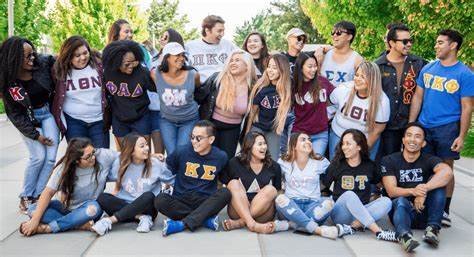
    Greek Life is the collective term used to describe the fraternities and sororities frequently found on the campus of colleges in the US. It’s called Greek Life because these organisations take their names from a combination of letters from the Greek alphabet, common examples are Sigma Alpha Epsilon or Pi Kappa Alpha. When the first fraternities were formed college was a male-only preserve but when women started to appear on campus they set up their organizations or sororities. For the most part this divide, on the grounds of gender survives to the current day.

    The common view of what fraternities and sororities are about probably comes from films like Animal House, the 1978 film that satirized and glorified Greek Life, in its portrayal of the drinking culture found in some fraternities. It was deeply influential in what people thought a US college experience should look like and has arguably led to some of the challenges to the Greek system in recent years.

    While the Animal House portrayal probably does exist in some places most Greek organisations have their roots firmly rooted in traditional values of camaraderie and philanthropy. Many of them will have a specific focus, for example, philanthropy, medicine, law or business. Some may be dedicated to a specific religion or ethnic group.

    How do you join?

    Following criticism of the way members were inducted into Greek Life some fraternities, sororities and indeed colleges have changed how they select new members. Traditionally those who wanted to join would first ‘rush’: this is the process where students choose which Greek organisations they want to join, attending recruitment events and interviews. Greek recruitment leaders use these events to take notes on the impression of the applicant and determine whether they would be a good fit for their organization. If they believe a person would work well they will offer the applicant a ‘bid’ or invite to join their fraternity or sorority.

    Having accepted the bid, the student becomes a ‘pledge’ member of that Greek organization until the following recruitment period. A pledge receives a ‘big’, someone who has been in the organization for one or more years than them, who will act as a mentor to the pledge, introducing them to people and showing them around the Greek organization. Bigs often pass down decorations, memorabilia, and Greek letter clothing to their ‘littles’ (the pledge they are looking after) as a way to continue spreading the word about their organization.

    Why should you join Greek Life?

    Friendship

    For many students arriving at a new college, and perhaps a new country, can be a daunting experience. Having people who can show you the ropes and ease your transition into college life can be a great help and joining a fraternity or sorority is one way to access that help. Once joined students tend to form a bond with other members, often these begin to resemble familial ties – fraternity members often refer to each other as ‘brothers’ and sorority members refer to each other as ‘sisters’. Many Greek devotees say that the friends you make in the house are strong, lifelong connections. Having these close friends can be an invaluable source of support during their time at college, it has been shown that members of Greek organisations have a lower dropout rate than non-members.

    Networking

    The Greek organisation a student belongs to will almost certainly be part of a larger network with brother or sister organisations on other campuses. Altogether it is estimated that there are in excess of nine million alumni of fraternities and sororities spread across the world and in all careers. Greek life gives students access to this network and can provide opportunities for internships while at college and help with employment and advancement post college with extracurricular activities to qualify.

    Giving back

    One aspect of Greek life that is often neglected in their portrayal in popular media is the work done to instil a strong commitment to service and philanthropy in their members. It is normal for a chapter to have somebody in a leadership position who will log the time members put in and coordinate events and fundraising. The work done at a particular chapter will often be part of a nationwide drive and it is not unusual for the national chapter to raise hundreds of thousands of dollars each year for their chosen charities.

    What are the drawbacks?

    Time

    If you intend to join a fraternity or sorority you should prepare for it to take over your time outside of class, particularly while you are a pledge. When you first join you are likely to be required to spend much, if not all, of your free time in meetings, completing tasks or just being at the chapter house. This can place a huge strain on your ability to keep up with coursework, so much so that some colleges have banned rushing during the freshman year.

    Even after you are a full member of your fraternity or sorority there are still many commitments you are expected to meet, taking part in fundraisers, social events, attending meetings and so on. Students need to have great time management skills and the ability to balance conflicting demands.

    Cost

    In some colleges, it may feel as if going Greek is the only way to make friends and have a social life, however, the cost can be one of the largest expenses in your budget.

    Most fraternities and sororities will have a joining fee and then dues of up to $1,000 per semester. On top of this, there will probably be incidental fees associated with being Greek such as fines for missing a compulsory meeting or other misdemeanours, clothes in your organisations colours or with their name on it, ‘donations’ to good causes supported by the chapter and tickets to formal and informal events. It all adds up.

    Hazing

    Described as ‘a ritual that involves risk, pain, or harm to gain some form of initiation’ and has been linked with the deaths of 40 students between 2007 and 2017. As a result of the publicity caused by these tragedies many colleges and Greek organisations have banned hazing and many states have made the practice illegal. The reality is that informal hazing continues, often it will be trivial or demining tasks but at the more extreme level, it can also involve the consumption of large amounts of alcohol and ‘tests’ of physical and psychological strength.

    Final thoughts

    The choice of whether to go Greek or not is a personal one, many people gain a great deal from the experience and the connections they make but it is not for everybody. Think about what you want to get by joining and then spend time researching to find fraternities and sororities that match your personality, interests, and identity. If you do decide to pledge, be smart, be safe, and don’t let yourself be pressured to do something you don’t feel happy doing.