abc

Category: Majors

  • Guide To Becoming a Lawyer in The US Part 1.

    Guide To Becoming a Lawyer in The US Part 1.

    Becoming a Lawyer in USA | Essential Training Guide | Ivy Central

    Becoming a Lawyer in the U.S.

    Through my discussions with students working with Ivy Central, I have noticed an increase in students expressing an interest in a career in law; with that in mind, in this article and the next, I will show you how to become a lawyer.

    This guide focuses on the US, and in my next article, I will look at the UK. The routes to qualification are very different in each country, so the first question you should ask yourself is, ‘Where do you see yourself working?’ If your answer is the US or the UK, then you should follow the route for that country. However, if you want to practice in a different country, research the requirements for where you want to live. Many countries will have ways in which somebody with a qualification from another country can ‘convert’ their qualification to enable them to practice in that country, but this is not always straightforward. As a general rule of thumb, people who have qualified in the UK find it easier to convert to working in another country than those whose qualification was awarded in the US.

    The legal profession in the US and the UK is regulated, meaning you must meet certain professional standards to practice. Once you have met these standards, the legal profession offers many career options to suit nearly all interests. No matter what area of law you would like to end up working in eventually, all people aspiring to a legal career start the same way. Irrespective of where you intend to work and which area of the legal profession you plan to work in, the path to becoming qualified can be challenging and lengthy.

    The United States is the most popular destination for Ivy Central students wanting to train for the legal profession, so I will start by taking you through the different steps required to qualify there.

    Top Summer Program: National History Academy | Ivy Central

    Complete an undergraduate degree.

    In the US, a degree requires at least four years to complete to get the right job. The first two years provide an opportunity to try out different areas of interest but will normally have some common thread running through them. As you approach the end of your second year, you will need to ‘declare a Major.’ This is where you state the area of study that you will concentrate on during your final two years and will be the subject you will do your final work. Although your major will be the focus of your work, there is still plenty of time to study other areas, do internships, etc.

    If you want to be a lawyer in the future, there is no set major that is required, but there are several considerations that you should be aware of.

    • Consider a course that will develop your critical reasoning and attention to detail. These are critical skills for lawyers; fields such as Classics, Linguistics, and Mathematics, demand more critical reasoning and attention to detail than others. Additionally, all liberal arts curricula or extracurricular spike are designed to foster these traits. Gravitate towards schools and programs that prioritize these skills.

    •  Choose a writing-heavy major. As a law student, you will spend a lot of time writing papers and taking long legal exams. Doing a major that will build your writing skills and stamina through frequent assessment will help you prepare for this.

    • Choose the right college. Your choice of college can greatly impact your chances of being accepted by a law school, but it is not just about the prestige of a particular college. Your college Grade Point Average (GPA) will be one aspect that law schools will look at; another will be letters of recommendation from your professors, so a college that offers a rigorous academic program and small class sizes is likely to be a better option than some of the very large state universities.

    • Look for colleges that offer ‘Pre-law advising.’ As a prospective law student attending a college that offers this will help give you the context and support, you need when it comes time to apply to law schools.

    Some people refer to doing a “Pre-law track’ as an undergraduate. However, there is no such thing, and unlike medicine, there are no prerequisite courses you must take to be considered for law school. You should choose an academic subject to major in; Political Science is the most popular major among those going into law school, but other options, including Psychology, History, and English, are also popular. The one possible exception is Patent Law, where an undergraduate degree in a technical field such as Engineering, Chemistry, or Computer Science is required.

    Take the Law School Admissions Test (LSAT)

    Toward the end of your undergraduate degree, you will need to take the LSAT, a standardized test used by law schools to assess the suitability of potential students. The test measures the skills critical to success in law school, including critical thinking, reading comprehension, information organization, and argument evaluation. The test is offered several times a year. Dates will vary on where you are taking it; however, you will need to take the test no later than December before the fall semester that you intend to start at law school.

    The Law School Admissions Service administers the LSAT, an online test of five different sections, each lasting 35 minutes, with a ten-minute break between the second and third sections. The different sections are;

    • Logical reasoning

    • Analytical reasoning

    • Reading comprehension

    • Unscored section

    • Writing sample

    Except for the writing sample, all sections are multiple-choice; the unscored section is made up of questions from any of the previous sections but doesn’t count toward the score awarded. The writing sample requires the student to take a position on a topic with no right or wrong answer. The essay is assessed based on the writer’s ability to support their position.

    After taking the LSAT, your raw score (the number of correct answers) is converted to an LSAT scale, the score you will receive. The lowest score is 120, and the highest is 180. According to the LSAS, the average LSAT score is 152, although this changes from one year to the next.

    Law School

    To practice law in the United States, you must be awarded a Juris Doctor or JD law degree. This takes three years to complete the qualification, which will take place at one of the many law schools approved by the American Bar Association. You should aim to complete your applications early in your senior year of undergraduate study, which means researching and planning your application during your junior year.

    The first year of law school is considered by most to be the hardest of the three. This is the year where all students must gain a foundational understanding of the law by studying topics across the legal spectrum, including civil procedure, constitutional law, legal writing, and contracts. Topics are taught using a case method approach where you will analyze judicial decisions and consider how they relate to other cases.

    Having made it through the first year, students better understand what is expected in the second and third years. It is also the point where you, as the student, can choose classes that match your interests. Alongside their study, most students will also become involved in extracurricular activities such as moot court competitions and the third-year legal clinic, where they can do real legal work for low-income clients.

    Bar Exam

    In the third year of law school, students will start to think about taking the Bar Exam; this is the exam that all lawyers will need to pass in order to practice and is taken in the state where you intend to work.

    Exams normally happen twice a year and usually last two days, although some will take three. The format for each state is slightly different but usually comprises multiple-choice questions, essays, and simulations. Having passed the Bar Exam, you are now able to practice, but that is not the end of your journey.

    Master of Laws

    Many law students will continue their studies beyond the three years of law school but studying for the LLM, and the Master of Laws is normally called. This qualification shows that the student has expertise in a specific area of law, such as international law, family law, or business law. Having an LLM is often a requirement that law companies will ask for as it shows that candidates have gained specialist knowledge in the law.

    Doctor of Judicial Science

    This is the highest law degree available in the United States and takes three years to complete. This is the qualification taken by those who have many years of legal practice behind them and now aspire to work as law professors in an academic setting.

    So, there you have it, a quick guide to becoming a lawyer in the United States. In the next article, I will look at the route for those who want to study in the United Kingdom.


    Summer Programs for High School Students | Ivy Central

  • ‘The Open Curriculum’: Should you opt for one?

    ‘The Open Curriculum’: Should you opt for one?

    What Is an Open Curriculum? Best Open Curriculum Colleges


    The Open Curriculum’

    Should you opt for one?

    As a follow-up to my previous blog on ‘What do you study at US colleges?’, I thought diving into some of the aspects mentioned would be worthwhile. I hope this blog will help you make your college search and shortlisting process smarter and easier, especially regarding some of the rather rare curricula offered by US universities.

    When I first started understanding the US education system, I was enthralled by the unique curricula each university offered. In particular, the Open Curriculum caught my attention as it encouraged students to dive into the subjects of their choice directly.

    Let’s understand what kind of student is likely to make the most of an Open Curriculum –

    1. If you aren’t keen on taking Core courses, as you want to engage in courses that you are interested in or those that align with your future goals

    2. If you want the complete freedom to explore various courses until you settle on a major/s

    3. If you would appreciate early guidance on how you can best prepare for the future you envision for yourself

    4. If you identify as an interdisciplinary learner who loves to delve into many subjects at once

    A common misconception about the Open Curriculum is that you don’t need to major/concentrate on a specific subject. This is untrue. You will need to declare a major or concentration in your second year, and you need to fulfill this requirement to graduate from college.

    Read More: US and UK Find the Right Job

    In this blog, I would like to explore four of the universities that offer an Open Curriculum –

    1. Brown University

    Brown’s famously known Open Curriculum allows students to generously explore the flexibility of this curriculum. While expected to complete concentration requirements, Brown allows you to ditch the traditional letter grades as you can opt for courses for satisfactory/no credit. However, remember that at Brown, you would also need to be comfortable with mapping your own syllabus and academic/research path. You can explore courses according to the ‘academic divisions’ they belong to or simply ‘your interests.’ These cover 80 concentrations that the university offers.

    2. Vassar College

    A small private college in New York, Vassar, too, boasts of an Open Curriculum in that way of not offer a Core or distribution requirements. The ‘open’ ethos demonstrated by its curriculum is also seen through their “Your Space” section in the application for incoming freshmen, encouraging students to share something they haven’t had a chance to. The Career Development Office maintains an incredible alum network (pssst. Meryl Streep and Anne Hathaway are alums), which can be a great resource for curating your niche.

    3. Amherst College

    Amherst, a hidden Ivy, does not offer a core curriculum, but undergrads are expected to complete one first-year seminar and their major-specific requirements. The academic path, otherwise, is yours to craft. If you don’t wish to choose a specific academic area as a major, you can pursue the Independent Scholar Program, where you can set out to create an individualized program of study under the guidance of a tutor, which a committee must then approve.

    Additionally, the academic flexibility offered encourages students to take up two majors, sometimes three! The lack of a core curriculum also means that students can undertake research starting their first semester, which is rare.

    4. Wake Forest University

    This ‘relatively large’ liberal arts university in Winston-Salem, North Carolina, boasts its beautiful on-campus magnolias and cherry trees. Interestingly, Wake Forest (or ‘Work Forest’ as some students like to call it) does not offer an Open Curriculum to all of its students. It does so for a select few that a committee nominates. These students get to have more freedom in terms of selecting their academic courses, along with fulfilling limited general education curriculum requirements.

    Some of the other colleges that offer an Open Curriculum are Hampshire College, Wesleyan University, Hamilton College, Grinnell College, and Smith College.

    A word of advice:

    While the flexibility offered by a college or university that offers an Open Curriculum may differ, you must understand how your undergraduate years will pan out when you opt for one. While it may allow more room to explore a variety of courses, it also means that you need to provide more structure to the academic route you take. These are the key points I would recommend you think about when you need to choose between a college offering an Open Curriculum and one that does not.

    If you haven’t already, I wish you luck with making a college choice.

    Working with study abroad consultants, overseas education consultants, or, as more commonly known, college counselors, can help you plan ahead and help you make the right choice for colleges. Ivy Central offers exceptional focus to help you prepare for college admissions throughout the high-schooling years. Start today!

  • Should I study for a Psychology Degree?

    Should I study for a Psychology Degree?

    Should I study for a psychology degree?

    Should I study for a Psychology Degree?

    Have you ever looked up at the clouds and seen animals in the shapes, or wondered why you catch somebody else’s yawn, perhaps you have felt sudden pangs of hunger as you have walked past a fast food outlet? If that sounds like you and you are interested in why you do these things, then maybe a degree in psychology is for you!

    What is psychology?

    Examples of psychology can be found everywhere, from conforming to societal norms to the typing symbol on WhatsApp, intriguing us and ultimately keeping us online longer.

    Psychology focuses on understanding a person’s emotions, personality and mind through scientific studies, experiments, observation and research. By describing the behaviour of humans, and other animals, we are better able to understand and sometimes manipulate outcomes!

    The applications of psychology are widespread, and as such, the subject has many diverse subfields, such as health psychology, developmental psychology, and forensic psychology.

    What do you study in a psychology degree?

    In a word, science. While not a ‘hard’ science degree like the physical science degrees, psychology very much has its feet deep into the STEM world, so you can expect to have studied subjects like biology, chemistry to a high level while at school. Another area that you will need to demonstrate some skill in is maths, particularly statistics.

    Psychology uses statistics to make sense of vast amounts of data and to understand its relationship to other pieces of data, even when those data points are tiny. While much of this statistical analysis can be done using statistical software, it is still important that students studying psychology have a good understanding of the field.

    As a science degree, you should expect to cover topics relating to the scientific method, but you will also get to explore areas such as developmental, behavioural, social, and cognitive psychology. As you progress through college, courses become more specialised. You might take courses on psychology as it relates to relationships, media, or education. You should also expect lots of reading, in your coursework, you will be expected to back up the arguments you make. Psychology is also a field where new studies and ideas are frequently being published, so it is important to keep up to date with professional publications.

    Is psychology a good degree for me?

    A psychology degree is a good choice for students who want to work with people and are interested in understanding human behaviour and mental processes. Helpful skills for psychology majors include open-mindedness, critical thinking, problem-solving, and effective communication abilities. Therefore, this major is for people who can handle stress, social dilemmas, and high-pressure situations.

    What can I do with a degree in psychology?

    Having an understanding of human thought, behaviour, development, personality, emotion, motivation, and more can give you insight that is valued across many different careers within psychology itself or more often in an almost endless number of other career areas.

    Professional careers in psychology: These will normally require you to go on to gain postgraduate qualifications before becoming licensed, in the US, or chartered, in the UK.

    If you intend to work in the US, it is important to know that each state has its licensing requirements that you must meet. That said, typically you will need to complete a master’s, or more frequently, a doctorate in psychology. In addition, you should expect to gain work experience in a related field together with at least one year’s post-doctoral experience. Having met these requirements, you must pass the Examination in Professional Practice in Psychology (EPPP) and any other requirements of the individual state before being awarded your licence to practice.

    For the UK, having completed your degree, it can take a further five years of experience and further training before you can call yourself a Chartered Psychologist.  After their degree, students wanting to gain chartered status will complete an accredited doctoral degree before doing further training and supervised work experience.

    If gaining professional status is for you, there is a wide range of psychology careers to train for, including:

    • Clinical psychology

    • Therapist or Counsellor

    • Educational Psychology

    • Sports and Health Psychology

    • Occupational Psychology

    • Neuropsychology

    Other careers where a psychology degree can be helpful 

    • Human Resources

    • Social Worker

    • Probation/Correction Officer

    • College/Career Adviser

    • Teacher

    • Marketing

    • Public Relations

    Top colleges and universities for psychology

    Psychology is one of the most popular degree courses in both the US and Europe so you should be able to find one that fits your needs. According to the QS World Rankings the universities with the top psychology courses are:

    • Harvard University

    • Stanford University

    • University of Cambridge

    • University of Oxford

    • University of California, Berkeley

    • University of California Los Angeles

    • University of Central London

    • Yale University

    • Massachusetts Institute of Technology

    • University of Michigan –  Ann Arbor

  • Should I Pursue a Business Degree

    Should I Pursue a Business Degree

    Why study business in 2021? - ESEI International Business School

    Is a Business Degree the Right Choice for Me?

    Business degrees of one description or another are probably the most common undergraduate degrees in the world and are likely to remain very popular with students for many years to come. The reasons for this are numerous, but common themes for why students choose this are its relevance to the world they see around them and an expectation of a strong job market with plenty of opportunity for advancement during their working career. Some of those I speak to have more focused areas of business that attract them, entrepreneurship probably being the most common.

    In this article, I’m going to explain the different types of Business degrees and what you might study if you decide to pursue one, before going on to look at what careers you might choose to go into if you graduate with a degree in Business.

    Types of Business Degrees

    At an undergraduate level, the three most common degrees are Business Studies, Business Administration, and Business Management. The differences between a Business Studies degree and a Business Administration degree can be small and the two names are fairly interchangeable, depending on whereabouts you are in the world. In the USA, Business Administration is the most common business major while in the UK and Europe most students will be pursuing a degree in Business Studies.

    Whichever of these degrees you pursue the curriculum is broadly similar and provides a broad-based foundation in many aspects of the business world. After the first year, many degrees will offer an opportunity to focus your studies on a more specific interest such as accounting, marketing, international business, or entrepreneurship.

    Business Management degrees have a greater focus on well, management. They will usually have a core program that comprises topics like staffing, planning, directing, organizing, and controlling. These five subjects form the bastion of management education.

    There are of course more specialized business degrees that cover a business field in detail, degrees are available in everything from marketing, entrepreneurship, human resources, health management, hospitality, and many more.

    Whichever degree title you end up pursuing you can expect to gain a broad education on business management principles, technical skills, and management abilities that will set you up for your future career. This common coursework is likely to include

    ·      Accounting

    ·      Communication

    ·      Business ethics

    ·      Management information technology

    ·      Business Statistics

    ·      Organisational design

    ·      Leadership

    What can you do with a Business degree?

    Business degrees open up a variety of career options, and graduates are in high demand, the skills learned and refined in a business program are necessary for every industry. Students can easily pursue a variety of business roles in small businesses, corporations, non-profit organizations, education, health, and more.

    More obvious careers with a business degree include roles in accounting and finance departments, which take in large numbers of business degree graduates. Other sectors with high demand for business graduates include marketing and advertising, as well as retail, sales, human resources, and business consultancy. The diversity and plenitude of careers with a business degree underlie the subject’s appeal for many students.

    Depending on your interests and specialisms, examples of careers open to people with a business degree include:

    ·      Advertising

    ·      Banking

    ·      Financial advisor

    ·      Public relations

    ·      Market research

    ·      Distribution and logistics

    ·      Insurance

    ·      Management consultancy

    Employment and postgraduate study in business

    As was discussed at the beginning of this article, a ready supply of good employment opportunities is seen as one of the attractions of studying for a business degree. This seems to be a reasonable expectation, the US Bureau of Labor Statistics predicts business and financial occupations to grow by around 8% between 2020 and 2030, and that some areas, such as Human Resources and Management Analysis roles, are expected to increase by much more. Graduates from UK universities were most likely to move into the labor market post-degree. According to ‘What Graduates Do,’ which tracks the outcomes of students post-graduation, around 90% were in some form of employment fifteen months after gaining their degree.

    Increasingly, completing your undergraduate degree in business is not the end of formal study in the field. A business degree can provide a path towards a master’s degree either straight after their undergraduate degree or, having gained some practical experience, by joining a Master’s in Business Administration (MBA). Some will choose to move on to complete an advanced professional qualification in an area such as accounting.

    Who should study for a Business degree?

    Studying such a broad degree means that most people could find an area of the course where they can excel, but there are some key skills that all degrees will require.

    Students who are naturally self-motivated and organized will excel in a business program. Business requires students to balance multiple tasks on top of their coursework, such as leadership positions, internships, work experience, service work, and more. Students who can show that they are involved and well-rounded will have a strong and broad resume to put in front of employers.

    Leadership is a characteristic that business students possess. Those who are good at collaborating and directing a team show great management skills that will serve them well in a business program.

    Those who naturally enjoy math and technology will excel in a business program. Business degrees often require that students take maths and computer science courses. This will likely include calculus, statistics, and computer-related courses.

    Students who are naturally drawn to topics in business have an interest in the field and may want to learn more about accounting, marketing, finance, management, and more.

    What colleges are good for economics?

    As one of the most popular subjects for study in higher education, it is no surprise that many colleges and universities will offer some form of business degree. The exception to this tends to be amongst the more elite colleges and universities. Places like Oxford, Cambridge, and nearly all of the Ivy League colleges don’t offer a straight business degree, some will offer economics with a management specialism. According to the QS World Rankings, the top business and management studies programs are to be found at:

    ·      Harvard University

    ·      INSEAD

    ·      London Business School

    ·      Massachusetts Institute of Technology

    ·      Stanford University

    ·      University of Pennsylvania

    ·      Bocconi University

    ·      University of Cambridge

    ·      HEC Paris School of Management

    ·      University of Oxford

    Conclusion: So, should you study for a business degree?

    Absolutely! The skills you will develop and the knowledge you gain are very much in demand around the world, resulting in many outstanding career opportunities after you graduate. It is a field where there are numerous opportunities to further your learning, meaning you can adapt to new opportunities or adjust your career path.

  • A Guide To STEM Majors – How To Avoid Dropping Out

    A Guide To STEM Majors – How To Avoid Dropping Out

    Highest Paying STEM Majors

    How To Avoid Dropping Out of STEM Majors

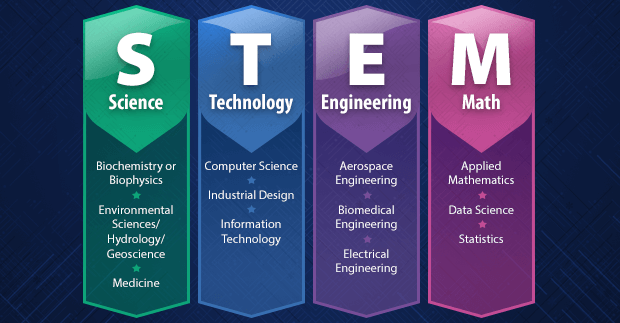
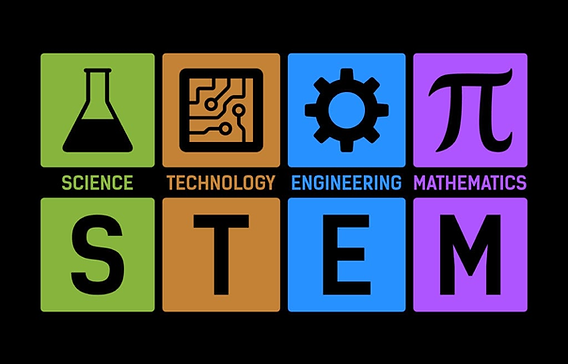
    Majors in science, technology, engineering and maths (STEM) are the most popular choice of major for the students we work with, so it was rather a shock to come across a statistic taken from the Engage to Excel report, stating that 60% of students who start college intending to complete a STEM major end up graduating with a non-STEM degree.

    There are many reasons for this, some key ones are:

    • The expectations of STEM faculty are higher than other departments, even if they do not teach the classes that have the most demanding workloads. Grade inflation, where work is marked higher than work of a similar standard would have been marked in the past, is less prevalent in the STEM majors than in any other majors on campus or in summer breaks.

    • Grading on a curve is more common in STEM classes than in non-STEM classes. This is where the score attained by the largest number of students becomes the middle grade, meaning that the higher and lower grades are fewer in number. The impact is that teachers have already decided that a set percentage will excel, succeed, muddle through, or even fail their classes before the first class has started.

    • STEM classes in the same subject are “cumulative.”   Earlier classes lay the foundations for the following classes. If you struggle in the early classes, your struggle is likely to continue into the more advanced ones.

    • The above combine to create a “sink or swim” mentality. Grading is more competitive. And if you don’t seek help, you are more than likely to fail.

    An important factor that can contribute to STEM students getting into problems with their studies is that in many colleges, introductory courses in subjects like computer science, chemistry, physics, biology, and mathematics are used to fulfill the core requirements for students who don’t intend to pursue STEM majors. The result is that it can be difficult to get into a class you need to progress onto the other classes you need to study, and you have students with a wide variety of interests in the one class. This is most commonly a problem in larger state colleges; the better ones recognise the problem and they run separate sessions for different groups of students.

    Below are some of the things you should be looking for when deciding if the college you are interested in college counsellor who will help you make a strong start to your STEM studies.

    • The quality of the textbook(s): is the text something that majors and non-majors will be able to understand, even if the faculty member or the teaching are poor lecturers?

    • The varied academic interests of students. For example, a prospective pre-med, psychology major, economics major, and environmental studies major all have different interests. But they must all take biology and chemistry. More schools are designing classes or lab sections around these interests.

    • The amount of help available. Many schools have peer tutoring programs in STEM classes and other subjects where a student who aced the course is paid to provide small-group or one-to-one instruction to other students who are struggling with the material. These programs have become quite visible, even at schools such as Georgia Tech that enroll some incredibly bright people.

    • “Flipped” lectures. One new technique used by colleges is to encourage students to listen to the lecture on their own time, then attend class to learn more about the material discussed.

    If you are a student intent on pursuing a STEM major, do take the time to explore not just what you will learn in class, but also how you will be taught. What are the average class sizes in introductory courses, and how will you be supported to gain the foundations you will need for your future courses? Get these things right,t and your chances of graduating with the STEM degree you are set on increase.

  • WHY THIS MAJOR ESSAY?

    WHY THIS MAJOR ESSAY?

    WHY THIS MAJOR ESSAY?

    In less than a month’s time, the big reveal of Supplemental Essays will take place. While there could be a variety of supplemental essays that colleges/universities ask their students to answer, one of the most common and prominent is the one about what would you like to study in college. We call it the ‘Why this Major?’ essay prompt.

    Voila! The perfect opportunity to prove your love for your major just arrived. So how do you welcome it?

    Well, here are 5 tips to help you do that –

    1. Your academic subjects and performance

    As an example: If you’re applying for Computer Science, you do not necessarily need to have taken Computer Science as an academic subject. However, you would need to demonstrate strong performance in Mathematics. Talking about your strong math skills definitely works in your favor.

    If you’re applying for gender studies, then talking about how History and/or Literature have pushed you to think critically about the world around you would help make your case for this major. Did you develop deep reading skills that have allowed you to go beyond the obvious and really analyze two sides of the coin?

    2. Your Academic Extracurriculars

    Academic Extracurricular activities are those that are related to your major. This is an amazing way to showcase a tangible outcome in support of your choice of major. Students typically would engage in writing a research paper or a book or creating an app. In the UK, these are typically referred to as Supercurriculars. When writing your UCAS Personal Statement, you can definitely talk about them.

    3. Opportunities offered by the University

    Colleges and Universities offer tons of clubs and organizations to meet students’ interests and talents. These literally range from a simple Robotics Club to something as fancy as the Squirrel Club at U.Michigan. The latter would make sense if you’re planning for the pre-vet track or Animal Psychology major! Thus, ensure that your choice of club/organization is in sync with your major and related interests.

    4. Summer Programs

    If you’ve participated in any summer programs that demonstrate your interest in the area you’d like to pursue at college, do dive into what you learned and the goals you achieved. This could be in the form of a poster presentation or a talk at a symposium or a full length research paper.

    5. Community Service Projects

    If you’ve demonstrated strong passion for a subject area through activism or volunteering, this is the time to mention it. One thing to be weary of is that some universities would have a specific Community Essay wherein you may need to use these anecdotes. In that case, it would be best to stick the any of the aforementioned points so that you can use your community project for the community essay, even though this doesn’t necessarily need to be the case.

    Final Word

    Supplemental Essays for 2021-22 will be declared on 1st August on the Common Application portal. Given the pandemic, you could expect some changes to the supplemental essays this year. Guess only time will tell. Ivy Central always here to help you.

    May the countdown begin!

  • Should I Study Computer Science?

    Should I Study Computer Science?

    Benefits of Taking Computer Science as a Subject of Study

    The Relevance of a Computer Science Degree

    The field of computer science has seen a surge in applications from students wanting to study the subject for their higher education degree. In the UK, applications to study computer science have seen a year-on-year increase of 4%, a massive increase over such a short period, while in the United States, the number of people graduating with a degree in the field has increased from 39,000 in 2010 to well over 88,000 in 2019.

    This increase in interest is perhaps no surprise given the prevalence of tech in our everyday lives and the vast amounts of money that some technology companies have made since the start of the new millennium. Computer science is the cornerstone of all technological advancements in the business world.

    However, students and parents need to recognize that the rise of Artificial Intelligence (AI) is transforming the field of computer science, thereby raising an important question about the relevance of a computer science degree. With AI automating many aspects of software development, coding, and problem-solving, the need for skilled computer scientists is evolving rather than diminishing.

    What is computer science?

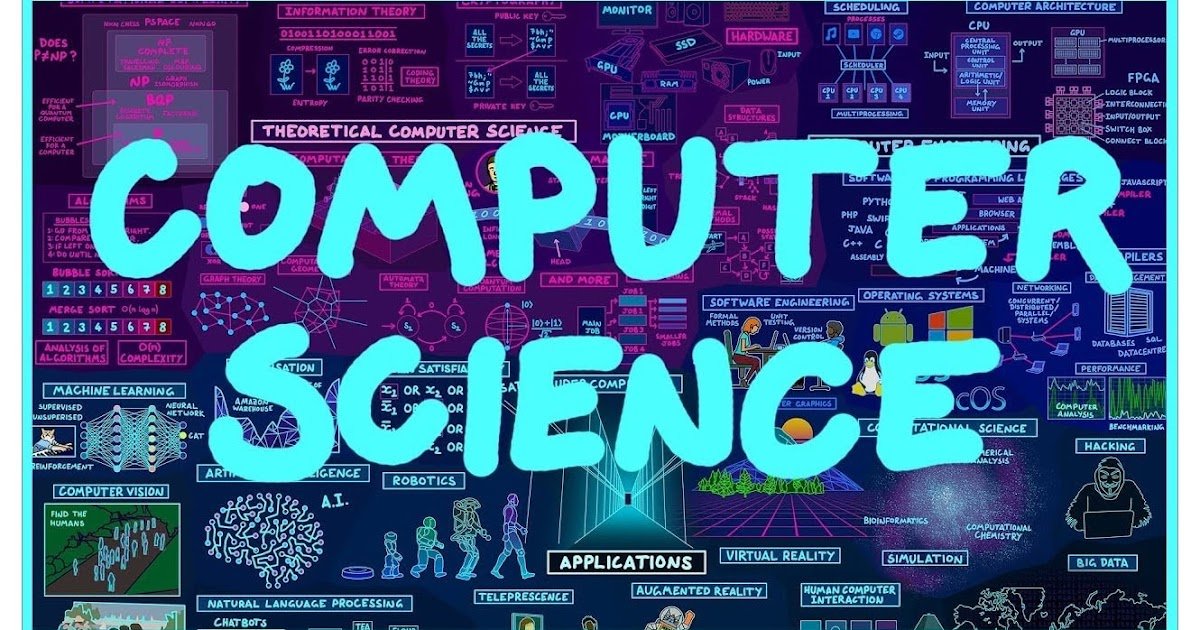
    Computer science is more than the study of computers, rather, it is the study of computational systems. While a computer engineer will have a detailed knowledge of the physical working of a computer system, the computer scientist will be focused on the software and software systems, covering areas such as their design, development, and application.

    Computer scientists design and analyse algorithms to solve problems and study the performance of computer hardware and software. The problems that computer scientists might address can include the abstract, determining what problems can be solved with computers and the complexity of the algorithms that solve them, to the tangible, designing applications that perform well on handheld devices, that are easy to use, and that uphold security measures.

    Hence, we need to view AI as not something that would be taking over programming and computer science careers, it should be considered as a tool that increases accuracy and even helps identify security weaknesses that humans may overlook.

    What do you study if you choose a computer science degree?

    If you choose to study computer science at college you will need a strong background in maths and physics, so it is no surprise that courses in these areas will be central to your college studies, particularly in the early years. With their focus on software and programming students will spend time learning to code, becoming skilled in programming languages such as python and SQL.

    As a student becomes familiar with the foundations of computer science they can expect to explore more specialised topics such as artificial intelligence, machine learning and algorithms.

    One aspect of studying computer science, that most students like, is that it tends to be quite practical. Students are normally set problems to solve, such as analysing or debugging code, sometimes they will work in groups to develop a solution but much of the work will be done individually, with students developing their own style of writing code.

    Being such a popular area to study at college presents some challenges for students; introductory courses can be huge, with over 1000 students at UC Berkeley. The increase in students has also meant that many institutions have struggled to recruit enough members of faculty to teach them.

    Most colleges and universities don’t expect you to have studied computer science at school and while it is helpful to have picked up a computer language or two before starting your degree, most courses will start teaching programming at the beginning as a way to try to unlearn bad habits that students may have picked up.

    What careers can you go into?

    Part of the reason for the increase in student numbers studying computer science is the boom in the tech industries. The US Bureau of Labor Statistics show that employment in computer and information systems is due to increase by 11% between 2019 and 2029.

    The most recent study of graduate destinations in the UK showed that over 80% of students entering employment having completing a degree in IT went into jobs related to their studies.

    Typical careers for computer science graduates include:

    • Software Engineer
    • Software Development
    • Network Security
    • Data Analyst
    • Applications Analyst
    • Game Development
    • IT Consultant
    • Network Analyst

    A degree in computer science can also be helpful for a number of other jobs including:

    • IT Sales
    • IT Training

    The Future Job Market for Computer Science Graduates

    While AI may reduce demand for traditional coding jobs, it is creating new opportunities in areas requiring specialized expertise:

    • AI & Machine Learning Engineers – Developing and optimizing AI models.
    • Cybersecurity Specialists – Securing AI-driven systems against evolving threats.
    • Data Scientists – Extracting and interpreting insights from large datasets.
    • Robotics Engineer- Robotics engineers develop robotic applications for many industries, including automotive, manufacturing, defense, and medicine.

    When thinking about careers using AI language in computer science many people will think of Computer Programming and that is certainly an option, but the US Bureau of Labor Statistics are expecting that employment in this field in the US will decline by 9% between 2019 and 2029. The reason for this reduction is that they expect that companies will increase the amount of work completed in countries where costs are less than the US.

    Who should study computer science?

    As previously mentioned, if you are going to do well in a computer science degree, you will already have a passion and ability in maths and science, and the skills that these subjects develop. Students often have a strong interest in technology, enjoying developing apps and writing code. Curiosity and a love of solving problems in creative ways are also traits that admissions professionals will look for.

    What colleges are good for computer science?

    As one of the most popular subjects for study in higher education, it is no surprise that most colleges and universities will offer some form of computer science degree. According to the QS World Rankings, the top computer science programmes are to be found at:

    • Massachusetts Institute of Technology (MIT)
    • Stanford University
    • Carnegie Mellon University
    • National University of Singapore (NUS)
    • University of California, Berkeley
    • University of Oxford
    • Harvard University
    • University of Cambridge
    • Swiss Federal Institute of Technology Lausanne (EPFL)
    • ETH Zurich

    Alternatives to computer science.

    A degree in computer science is probably where most potential college students with an interest in working in computing programs start when they are thinking about what to study, but there are lots of related alternatives that should also be considered.

    • Computer engineering – this is, at its core, an interdisciplinary degree, bringing together the computational skills of computer science, with the knowledge of electrical engineering. It can be a good option for people with an interest in developing computer systems, robotics and electronics.
    • Information technology – can be seen as the application of computers in business with graduates going into roles like systems analysis where they will help to develop and maintain the systems and data management needs of business.
    • Information Science – once again has more of a business focus, although this time it is about finding ways in which technology can support the needs of business.
    • Data Science – is the conjunction of computer science and statistics. Data science students will learn the skills to enable them to analyse and find pattens in data using programming languages and specialist software, based on the principles of calculus and statistics.

    Is a Computer Science Degree Still Worth It?

    Yes, but it must evolve. The traditional emphasis on programming is no longer enough. Universities must prioritize AI, data science, computational theory, and ethical considerations. While AI may reduce the number of basic coding jobs, the demand for AI professionals is only growing. The role of computer science is expanding beyond traditional tech jobs. AI is being applied in medicine, finance, law, and even creative industries, requiring professionals who understand both the technology and its applications.