abc

Category: US Colleges

  • What You Need To Know About Brown University

    What You Need To Know About Brown University

    10 Facts about Brown University - Fact File

    All You Need to Know About Brown University

    Overview

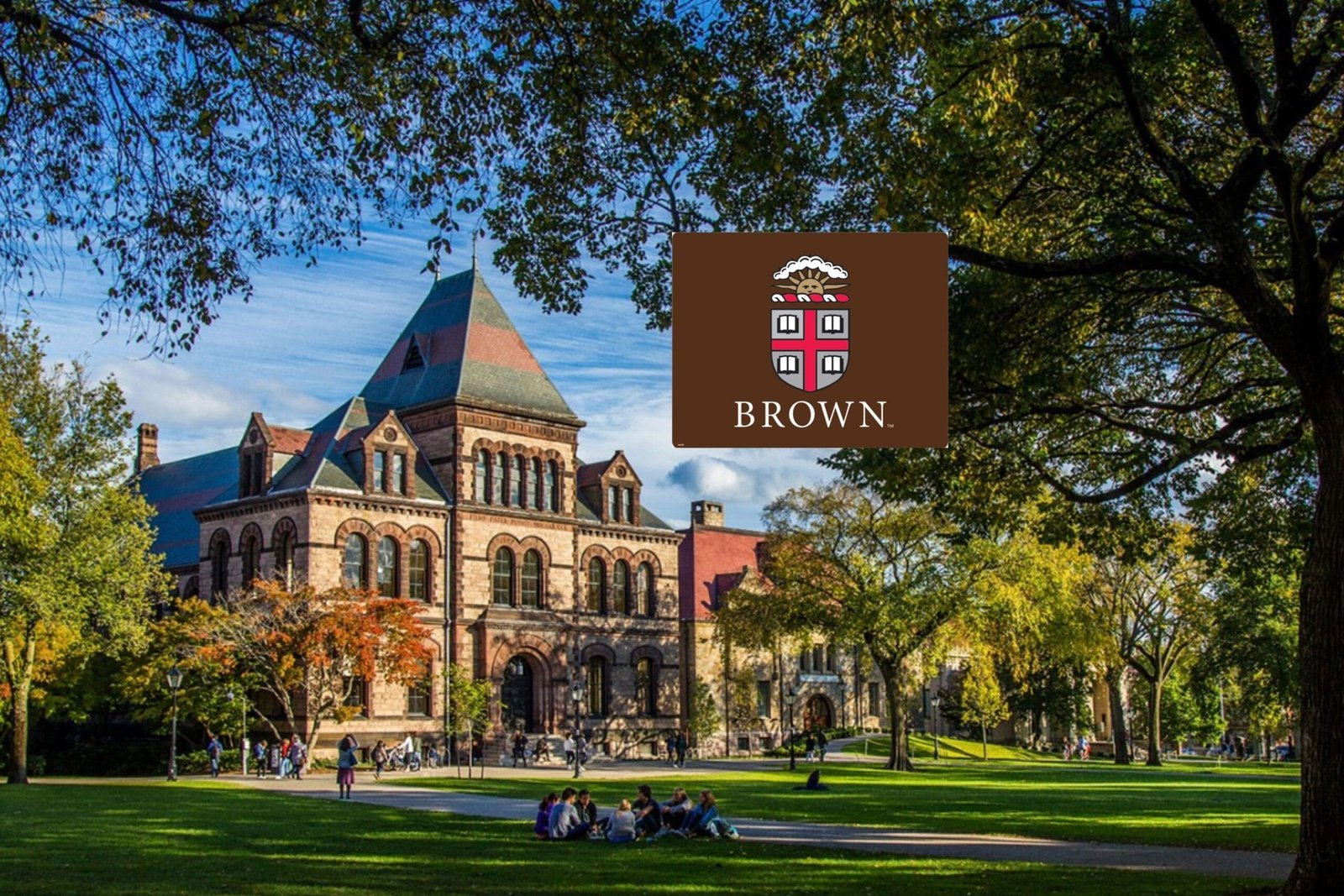
    Brown University is a private Ivy League research institution located in Providence, Rhode Island. Founded in 1764, Brown is the seventh-oldest college in the United States and has a long-standing reputation for academic excellence.

    • Location:

    Brown University is located in Providence, the capital of the smallest US state, Rhode Island. Known for its rich cultural history, vibrant arts scene, that is supported by the large student population in the city. Providence is easily accessible by car, bus, train, or plane, being situated approximately one hour away from Boston and three and a half hours from New York.

    • Student Cohort Size:

    Brown has a total undergraduate enrolment of approximately 7,500 students, making is one of the smaller Ivy League colleges, midway between Dartmouth and the smallest, Princeton. Add the students pursuing one of the university’s graduate programs, and the total college enrolment is approximately 10,000 students.

    Approximately 10% of Brown University’s undergraduate population is made up of international students from over 100 countries. Considered to be something of a bastion of political correctness, the diverse student body brings a wealth of experiences and perspectives to the university community.

    Admission

    • Acceptance Rate:

    Brown University’s acceptance rate for the class of 2025 was 5.4%. This is one of the lowest acceptance rates in the country and demonstrates the high level of competitiveness among applicants.

    • Acceptance GPA:

    The average GPA of accepted students for the class of 2025 was 4.08 on a 4.0 scale, reflective of the high academic standards at Brown University and the rigorous coursework required for admission.

    • Types of Admission:

    Brown University offers two types of admission: Early Decision and Regular Decision. Early Decision, (ED) is a binding agreement, meaning that if a student is accepted, they are required to attend Brown University. Applying ED can improve your chances of acceptance but you need to be absolutely sure you want to go to Brown as you will not be allowed to apply to any other colleges. Regular Decision, (RD) is non-binding, allowing students to compare financial aid offers from multiple universities before making a final decision. Application dates are 1st November for ED and 5th January for RD.

    • Additional Admissions Requirements:

    In addition to the standard application materials (transcripts, test scores, essays, etc.), Brown University requires applicants to submit graded written work from a humanities or social sciences course, as well as a recommendation from a teacher in a core academic subject. Currently Brown is test optional, meaning that you can choose to submit SAT or ACT scores, but you will not be considered less favourably if you don’t. Brown doesn’t offer or require students to interview.

    Read More: Yale University Acceptance Rate

    Academics

    Brown University offers over 80 undergraduate majors, ranging from Anthropology to Visual Arts. Brown is the only Ivy offering an Open Curriculum meaning that there are no distribution requirements or core that students need to follow to graduate. Instead, students can explore their interests and passions by designing their own academic programme. The freedom to set their own studies can be liberating for students, but they need to be mature, self-confident and use their own initiative to make the most of it. Students receive support through the ‘Advising Programme’ which covers both academic and personal advice including in dorms.

    • Standout Concentrations:

    Brown offer ‘Concentrations’ which are Majors under a different name. While all of the programmes offered at Brown are considered ‘strong’ Brown is particularly regarded for its concentrations in the humanities and social sciences, including English, History, Political Science, and Sociology. Additionally, the university’s programs in the life sciences, such as Neuroscience and Molecular Biology, are highly regarded. It also offers its Program in Liberal Medical Education, (PMLE), an eight year combined undergraduate and medical school education.

    • Faculty/Student Ratio:

    With a faculty/student ratio of 1:7, students attending Brown have ample opportunities to work closely with professors and engage in meaningful research and academic discussions. Having such a low faculty/student ratio, results in approximately 70% of classes having fewer than 20 students in them.

    • Four-Year Completion Rate:

    The four-year completion rate for Brown University is approximately 86%, which is higher than the national average. This demonstrates the university’s commitment to providing a supportive and engaging academic environment that fosters student success.

    • Cost of Attending:

    The cost of attending Brown University comes in at approaching $85,000, made up of tuition and fees, room and board, books and other expenses. Currently, Brown is only need blind for domestic students, however, they have recently announced that they will extend this to international students starting courses in the fall of 2025.

    In conclusion, Brown University is a highly competitive and prestigious institution known for its academic rigour, diversity and inclusion student body, and commitment to innovation and excellence. With a wide range of majors, a supportive faculty, and a commitment to student success, Brown University offers an unparalleled academic experience for those seeking a challenging and rewarding educational journey.

    Working with study abroad consultants, overseas education consultants, or, as more commonly known, college counsellors, can help you plan ahead and make those high school years count. Ivy Central offers exceptional focus to help you prepare for college admissions throughout the high-schooling years. Start today!


  • Planning for College – Winter

    Planning for College – Winter

    Planning for College.

    Planning for College – Winter

    How does it happen so fast? Here we are in December; for many students, it is already halfway through the academic year! Whether in Grades 9, 10, 11, or 12, it’s time to take stock of what you have achieved in recent months and plan for the critical months ahead. While there is no ‘right’ way to prepare for applying to college, the pointers in this blog should help you keep on track.

    Grade 9 and 10/ Freshman and Sophomore.

    The winter break is a good point for taking stock of what you have been doing over the last few months and ensuring you are prepared for the rest of the academic year. However, it is also time to make some longer-term plans.

    • If you have received or are about to receive an end-of-semester report, try not to look at it as teachers handing out marks. Instead, try to draw satisfaction from the things that have gone well and learn where they haven’t. If you are struggling, ask your teachers where your gaps in understanding are and put a plan in place to go over those topics again.

    • Many students find the move from Grade 8 to 9 a challenge, particularly managing to keep on track and up to date with their work. If this sounds like you, I encourage you to use a planner to help you use your time more effectively. At Ivy Central, we like using the free downloadable templates from Passion Planner.

    • Keep playing an active part in lessons; remember, you don’t want to be the one sitting at the back, not contributing until you are asked.

    • If you need help, ask!

    • If you are in Grade 10, you should consider what subjects to do in Grades 11 and 12. Take the time to research the options you are interested in; does the coursework interest you? Will it be helpful for what you want to online study at college or university? Are there any specific subject requirements for any career you might be interested in?

    • December is the month when many competitive summer programs open for applications. Spending your summer participating in one of these programs can help build your application profile, so consider spending a few weeks deep diving into a topic that interests you or perhaps working on a research project alongside a Ph.D. student.

    • Continue with extra-curricular activities you are involved with; are there new things you would like to try?

    Grade 11/Junior Year.

    In many ways, this is when your application season begins. Grade 12 have just about finished their applications, so teachers and counselors switch their focus toward those in Grade 11.

    • If you still need to build a college list, now is the time to start. You can begin by creating a long list of colleges you would consider applying to. These may be ones you have heard about; perhaps a relative went there or is there now. Then, you can use respected sources on the internet to help you explore them in more detail.

    • Talk to your family about any considerations they would like you to consider when looking at colleges. For example, they may want you to focus your college search on particular parts of the US or insights into what type of college will best fit you.

    • One area that can be more difficult to discuss with parents is how your college will be funded. Attending college is expensive, around $40,000 to $60,000, depending on the college, so having a clear understanding of what your family can afford at the beginning of your search can save you time and heartache.

    • As with students in Grades 9 and 10, now is the time to apply for a competitive summer program.

    • Grade 11 is when most of our students will sit an SAT or ACT test. If you didn’t do the test during the first few months of Grade 11, then the next sitting of the SAT will be in March and will be the first of the ‘new’ style SATs. If you have not done so, download the online SAT Bluebook, which has four complete practice tests to help you prepare. The next ACT test will be in early February.

    Grade 12/Senior Year

    Crunch time! If you applied early to any colleges, you should have heard back from them by the middle of December; if you have been accepted, congratulations, you are going to college. On the other hand, if you didn’t apply, have been rejected, or were deferred from your early applications, it’s all to play for.

    • The end of December sees the start of the Regular Decision (RD) round of applications. Before you submit your application go over it again. If you were rejected from your early applications, can you see why? Consider your college list. If you were not accepted in the early round, ensure that all the colleges you apply to RD are not of a similar level, and ensure you have a safety or two.

    • If you have been deferred from the early round, don’t let that stop you from applying to other colleges in the hope that your deferment will convert into an acceptance. Instead, send a Letter of Continued Interest (LCI) to your deferred college in January, letting them know that you still want to go there and updating them with the great things you have achieved since your initial application.

    • Keep motivated. Once all your college applications have been submitted, you can ease off a little on the school work, but try to avoid it. Colleges can and do withdraw offers of places from students who don’t perform as well as expected in their final assessments. Evidence suggests that students whose final grades are lower than expected are more likely to drop out of college.

    Working with study abroad consultants, overseas education consultants or as more commonly known, college counselors can help you plan ahead and make those high school years count. Ivy Central offers exceptional focus to help you prepare for college admissions throughout the high-schooling years. Start today!

  • Summer Programs for High School Students

    Summer Programs for High School Students

    Comprehensive Guide to Claremont McKenna College | Ivy Central

    While few Summer Programs have already opened their applications for an early-round, the others will follow suit shortly! This blog comes in the form of a step-by-step guide towards planning your summer for the next year.

    The first question to ask is “Are you keen on attending a summer program?” You may also wish to consider if you’re keen on exploring opportunities within your country or would want to travel abroad. This involves bearing the costs of tuition, accommodation, travel, and also planning your summer around this commitment, once made.

    The second question to ask is – what kind of a summer program do you want to attend? The major types include those that are research-focused or ‘academic enrichment courses’ or a blend of the two. Shortlisting your options could be a matter of where you are in deciding a major or a career path. If you feel you are confident you wish to pursue the biomedical sciences, then opting for a research program during the summer could be a good idea. On the other hand, if you are unsure whether you like psychology better than neuroscience, you could opt for an academic enrichment course in either of these to confirm or reject this academic interest.

    The third question upon shortlisting your options is to analyze whether you are able to demonstrate interest in the academic field through skills and experience gained. For example, if you’re keen on applying for a Math program, have you almost always received top grades? Have you participated in olympiads or math competitions? Are you part of a Math Circle? Are you part of a Math Club in school? Do you love to solve advanced math problems in your spare time?

    The fourth is to check if the program asks for teacher or guidance counselor recommendations. If they do, it’s usually in a combination of

    One teacher rec + one guidance counselor rec

    One teacher recommendation

    Two teacher recommendations

    guidance counselor recommendation

    So, how should you select whom to request for an LOR?

    Ensure your grades in this subject are excellent

    Your recommender really likes you as a student and will have many things to reflect on

    Your recommender is able to communicate his/her/their thoughts effectively

    This recommender teaches a subject that is in a way aligned with the subject you’ll be exploring through the program. (e.g. asking a math teacher for a Creative Writing program would not be ideal)

    Upon identifying your recommender/s, ensure to send them a brag sheet. This document includes a list of your achievements inside and outside of the classroom. Add reflective statements against every activity to let them know what you learned and the skills you gained. Alternatively, the brag sheet could be in a QnA format.

    The fifth thing to do is to reflect on these activities and accomplishments through your essays. The most common ones are –

    Why are you applying to this program?

    Why are you applying for this track/subject area?

    Tell us something unique about yourself

    Remember to talk about any projects you are involved in and how it has helped you develop skills that you could hone through the program.

    Read More: Boston Summer Program

    The sixth and final thing is to submit your application. In case of a rolling application, you may want to submit it as soon as you can since these mostly act on a first come first serve basis. Be mindful of the deadlines if you’re applying to numerous programs and ensure that you have everything in place, including the school transcripts and rec letters.

    Wish you luck with your International summer school applications!

    Working with study abroad consultants, overseas education consultants, or, as more commonly known, college counselors, can help you plan ahead and make those high school years count. Ivy Central offers exceptional focus to help you prepare for college admissions throughout the high-schooling years. Start today!

  • Records Broken and the US Universities Slip

    Records Broken and the US Universities Slip

    QS University Rankings

    At the start of June, the 2021 the QS World University Rankings were published and 1300 universities across the world poured over the lists of colleges and universities to see if they had gone up or down from last year.

    The QS rankings are significant because they are one of the three most regarded rankings for universities across the world, the others being the Times Higher Education World University Rankings and the Academic Ranking of World Universities (ARWU), also known as Shanghai Ranking. In this blog, as well as looking at the headlines from the QS Rankings, I will also look at some of the trends that these rankings continue to show.

    The headline

    The US and UK continue to dominate the top ten positions, the US has five, while the UK has four. The final spot in the top ten is taken by Swiss based ETH Zurich in eighth place.

    Massachusetts Institute of Technology (MIT) has, for an unprecedented tenth year, taken the top spot as the world’s best university in the rankings, while the University of Oxford has jumped three places into second place. Stanford University and the University of Cambridge are joint third while for the first time since the rankings have been produced, Yale University ranked on fifth Harvard moves out of the top three and into fifth. The remaining five in the top ten are:

    6th        California Institute of Technology

    7th        Imperial College London

    8th =     ETH Zurich

    8th =     UCL

    10th      University of Chicago

    Changing country representation

    While MIT chalked up a decade at the top of the rankings and the US continues to dominate them with 177 colleges and universities making the list, there has been a significant decline in their overall performance with 91 universities dropping down and only 29 gaining places. This decline has included some prestigious institutions, Harvard dropping out of the top three for the first time, Cornell dropping out of the top 20 and Duke out of the top 50.

    The US is by no means alone in having a difficult year in terms of the rankings, Japan and South Korea were other countries with big overall falls. Japan had 24 institutions move down the rankings while only five showed an improvement, South Korea had 20 go down and six improve.

    Read More: Early Decision Notification

    Meanwhile, there were strong performances by institutions in China, which is the most improved country in terms of the number of institutions that have improved their ranking, 32. For the first time, China had two universities in the top 20, Tsinghua University in 17th place and Peking University just behind in 18th. Australia was another country to see a strong performance, with 16 institutions gaining places, including all of the top four universities. Canada also saw more institutions rise than fall.

     How the rankings work

    In order to rank each university in a consistent way, the QS Rankings assess them across six metrics.

    ·      Academic reputation  40%

    ·      Employer reputation  10%

    ·      Faculty/student ratio  20%

    ·      Citations per faculty  20%

    ·      International faculty ratio  5%

    ·      International student ratio  5%

  • Who to ask for a Recommendation Letter?

    Who to ask for a Recommendation Letter?

    Who to Ask for a Recommendation Letter for College Application?


    It is normal for colleges to ask you to send one or more letters of recommendation as part of your college application. Applications for competitive summer programs are another occasion when you may find yourself asking Who should I ask?

    Normally, what the college or summer program is looking for is an academic reference, an insight into your scholarly capabilities from those who have taught you and can comment on your approach to your academic pursuits and your overall presentation as a student.

    This article will provide you with a step-by-step guide on how to go about identifying who to ask in a letter and how.

     Who to Ask?

    Sometimes you will be asked to get a letter of recommendation from a specific subject teacher. For example, if you want to attend a summer school looking at an aspect of physics, you may be asked for a reference from either your physics or maths teacher.

    More often than not, you will be asked for one or two teacher recommendations. You have probably had several teachers each year throughout school so there are lots of possible teachers to choose from. So who to choose?

    You might think that the teachers in the subjects you get the best grades in should be to ones to approach, and that may well be the case, but you should think more about which teachers know you best and will be better able to describe what you are like as a student, beyond your academic grades

    If you didn’t speak much and just sat in the back of the class during those classes, your teacher might not have much to say about you that couldn’t be inferred by transcripts. Instead, you should go for teachers who best know your personality, ambitions, and work ethic. These teachers are more likely to be enthusiastic about helping you out, and can probably craft a genuine, compelling letter of recommendation.

    A teacher you have had across several different grades can be an excellent choice as they have overseen your academic progress for a long time and can attest to your achievements and growth more than teachers who have only had you for one year or semester.

    Other teachers to consider could include:

    • Any teacher that is in your intended field of study, for instance, if you plan to pursue biochemistry on a pre-med track, your biology or chemistry teacher could be a strong contender, as they have probably seen your passion in the classroom.

    • Any class in which you participated more than usual, talked to the teacher after class or regularly asked questions can show how dedicated you are to learning.

    • Even if you weren’t the top academic performer, the teacher may have recognized your tenacity and your strong work ethic – important qualities for a college student to have.

    Whoever you choose, you need to be sure that they can write a great, personalized letter for you.

    Embark on a transformative higher education journey and elevate your path to academic success with the expert guidance and personalized support of an Ivy Central college counselor.

    Should You Do an English Degree? | Ivy Central