abc

Tag: College Choice

  • Alternate US Colleges and Why You Should Consider Them

    Alternate US Colleges and Why You Should Consider Them

    Best Alternative Colleges in the US & Why Should Consider Them?


    Alternative US Colleges to Consider in your Search

    Ever thought of attending a university where you don’t receive letter grades, but instead narrative evaluations from your professors, or one where you get to voice your opinion without thinking twice?

    Introducing ‘Alternative Colleges’. Unknown to most international students, the student body from these colleges welcome students from all ethnicities, races, gender, sexuality with open arms. These colleges are non-conforming and follow uniquely designed curriculums, that can only be termed ‘liberal’ and ‘liberating’.

    Here’s a list of colleges you could consider:

    1) Pitzer College, California

    Part of the Claremont Consortium, Pitzer is one of the most reputed alternative colleges. A small liberal arts college with just over 1,000 undergraduate students, it is known for its “progressive thought, social responsibility, environmental sustainability, and open social attitude.”

    Pitzer is the first in the country to offer a Secular Studies major, which includes courses on God, Darwin, and Design. The community government makes decisions on faculty promotion and curriculum. Individualism is treasured here, sometimes fiercely. In the 1970s, Pitzer students saved a California craftsman-style house from a wrecking ball and moved its pieces to campus. It now serves as a study space and restaurant for students.

    2) Oberlin, Ohio

    Named as the college that invented non-conformity, you’ll find the annual Drag Ball an experience. It is the first college to accept women and minorities. Oberlin Conservatory of Music is one of the best performance schools. EXCO, the Experimental College offers townspeople and students the chance to learn together. You will find students talking about anything ranging from Japanese woodblock prints to Russian cinema. Social activism is huge. Oberlin College and Conservatory

    3) Hampshire College, New York

    Students design their own interdisciplinary concentrations and projects. Part of the five-college consortium with Amherst College, UMass Amherst, Smith College, and Mount Holyoke. The Kern Center looks into building environmental sustainability, making the campus 100% solar-run. The best part is that you don’t get graded on your exams, instead, your professors provide you with ‘narrative evaluations’ (written evaluations and critiques). Along similar lines, students don’t give tests but are expected to submit portfolios, evaluations, and self-reflections on academic development. No wonder they refuse to accept SAT/ACT scores.

    The most unique feature of this college is the ‘Division System’ which ensures that there are as many curricula as students, on campus, each one curating their own with the help of faculty advising. Hampshire College | Hampshire College

    4) Sarah Lawrence, New York

    For those who love writing, Sarah Lawrence is the place to be. You’ll get a ‘don’, a professor specifically assigned to mentor you through your college years. Academics are mostly independently procured, so you’ll need to be self-driven and independent. Writing, Literature, Visual Arts, Filmmaking, and Psychology are popular majors. They have a great premed program along with strengths in the CS department. Professors meet their designated students weekly or biweekly following Oxford University’s tutorial system, ensuring students don’t fall behind. ‘Conference Work’, or research is nearly done by all students under the supervision of their ‘don’. SL is high on student activism and you’d rarely ever meet a conservative on campus. Welcome to Sarah Lawrence College

    5) Reed College, Oregon

    Quirky intellectualism – two words that describe Reed students. Steve Jobs attended a semester here before dropping out and going ahead to found Apple.

    It follows the Honors Principle, similar to Quaker colleges. Students receive lengthy commentaries in the form of evaluations. Has the highest percentage of grads from a liberal arts college opting for PhDs in the future.

    ‘The Multicultural Resource Center’ celebrates student and teacher diversity through events, lectures, etc. There are six ‘language houses’ and each gets a native speaker. ‘Paideia’ is a weeklong program of non-credit, alternative classes such as how to speak with a French accent to the history of Batman. Tons of students participate in SEEDS (Students for Education, Empowerment, and Direct Service). Reed College

    6) Bard College, New York

    Known for its non-conformism, freshmen arrive three weeks before classes start for a ‘Workshop in Language and Thinking’. ‘Citizen Science’ is a unique 3-week workshop where students learn about topics like infectious diseases and teach these to the students in local schools. Bard conducts ‘Moderation’, a performance review in the middle of the year, where a panel of professors assesses and provides feedback. Photography is the toughest major to get into but is also known for programs like Languages and Literature, Visual and Performing Arts, Human Rights, CS, Biology (similar to Sarah Lawrence).

    Students can also devise their syllabus from their tutorial and find a professor to sponsor it. Also, Bard allows you to take an Entrance Examination where students demonstrate their academic ability by submitting four 2500-word essays that get graded by profs.

    Apart from these, other alternative colleges are Hamilton College, Occidental College, and Prescott College.

    If you’d like to design your path, need extensive teacher support, love student activism, are non-conforming, or have unique interests, do consider these amazing alternative colleges where you’re driven to make a change!


    All You Need to Know About Bethany College

  • Public Vs Private

    Public Vs Private

    What Is the Difference Between Public and Private Universities?

    Differences

    The simple difference between Public and Private Universities is that Public universities are paid for by the state’s taxpayers and private universities run on endowments from alumni etc. This changes the way resources are allocated, and mainly the way students get admitted. For all public universities, the Common Data Set would say that the criteria for admission for state residency are “very important”. The simple logic to this is that public or state universities, given that they are funded through resident taxes, prioritize local or domestic students over out-staters or international applicants. Therefore, most public universities will have about 2%(such as at U.Maryland) to 8% International students.

    For the purpose of this blog, let’s consider differences under these sub-headings – financial, academic, and social.

    Financial Differences: Cost of Attendance

    Attending a public university can be really affordable if you qualify as an in-state student. Even international students do not need to spend exorbitant amounts of money as opposed to what they would at a Private University. The reason again being that private unis run on student tuition and heavy endowments.

    Academic Differences: Size, Support, and Facilities

    Your academic performance at a university can be influenced by its size, the support you receive from faculty and peers, as well as the facilities the university provides. Let’s take a closer look at each of these.

    Read More: US Curriculum Requirements

    1. Size

    Most public universities are large, having students from 20,000 and above. Some of them such as the University of Illinois at Urbana Champaign have over 30,000 students. One of the main reasons for this largeness is that they need to accommodate more instate students as these unis are government funded and the obvious objective is that more students opt to pursue further education post high school. Statistics show that only 37.5% of the US population aged 25 and above had graduated from college or any higher education institution in 2020 as opposed to 7.7% in 1960. To continue this upward trend in creating an educated populace, most public universities have a massive graduate population as well. Naturally, these campuses are huge and spread out to accommodate thousands of students and the facilities they need.

    Private universities on the other hand may be very small such as the liberal arts colleges and unis or could be mid sized universities such as Northwestern University with approximately 8,000 to 9,000 students.

    2. Support

    Public Universities, given the large number of students, often ask post doctoral or graduate students to assist and advise undergraduate students. Sometimes they also take over introductory classes and this may actually work out really well for some students and in certain cases. Although if you would rather prefer having a professor teach you all the courses you’re taking, then public unis may not be ideal for you. Here’s where private universities step up their game. Professors at private unis often have an open door policy and oftentimes also invite students for cookies and tea at their own homes, as they tend to live on the campus or nearby. This accessibility can prove to be really beneficial if you need more academic support.

    The other aspect to consider is career advising. If you’re someone who needs extra support to chart your academic path, then private unis could provide that to you through its career advising services. Given the limited number of students, every advisor has more time available for each of their students.

    3. Facilities

    Given state funding, public universities are known to update their research and lab facilities with the latest equipment and technology. Private Universities are able to do the same through endowments. However, not all private institutions get enough endowments to constantly upgrade their facilities – especially the smaller ones. This could be a challenge for students keen on pursuing top-notch research or hands-on lab experiences at small women colleges.

    Social Differences: Diversity, Social Scene, Housing

    1. Diversity

    Public Universities, while large, reserve their seats for in-staters. This could bring in a uni-dimensional mindset to that university, simply because most of the student community is coming from that state. The UCs increased seats for Californians recently, so it could be assumed that a Californian mindset would govern these campuses. But, who’s complaining?!

    Private Universities attract a multi-cultural population also because the opportunities and the environment to engage with students from across the globe is more accessible, especially if you qualify as an introvert.

    2. Social Scene

    The social scene at public universities is typically governed by athletics. You may just become best friends with your neighbor at a soccer game.

    Both public and private universities offer a Greek life, though not all of them of course. This means pledging allegiance to a sorority or a fraternity club for the time you’re at the university and beyond. They may provide an excellent way to network, and find a support system away from home. However, few Greek clubs have been controversial for issues regarding alcohol abuse, sexism, racism, and elitism. Therefore, it is important that you talk to peers about the club you are keen on joining.

    3. Housing

    Public Universities are often called commuter schools, as a majority of their students live off-campus and commute to college every day. This can make a boarder feel lonely during weekends if they haven’t formed their own circle of friends who live on campus. Most private universities offer a four-year housing plan, and a lot of them make it compulsory for freshmen to live on campus. This helps you bond with nearly everyone and expand your social circle.

    Public or Private: Is there a better fit for you?

    Well, it depends, doesn’t it?

    Typically speaking if you are someone who enjoys interaction, likes to really know the people around you, needs a smaller environment to learn and grow, a private university could be a better fit.

    If you like a larger-than-life social scene, enjoy the rah rah of school spirit, and you would happily take control of your learning, then you would enjoy being at a public university.

    Working with study abroad consultants, overseas education consultants, or, as more commonly known, college counselors, can help you plan ahead and make those high school years count. Ivy Central offers exceptional focus to help you prepare for college admissions throughout the high-schooling years. Start today!

  • Understanding College Rankings

    Understanding College Rankings

    Expert Guide to Understanding US and UK College RankingsSeptember is college rankings season. Across the world, websites and newspapers publish stories about the rankings of colleges and universities; some focus on specific countries like the US and UK, while others claim to tell you which are the ‘best’ in the world.

    While there are many other factors that students should use when making final admission decisions, college ranking lists are a resource that applicants should use, so in this blog, I’m going to help you understand college rankings.

    What are rankings?

    College rankings have been around for many years. Offering a list of colleges, ordered by numerical scores, they have become an essential part of the annual education cycle, with the US News, Times Higher Education, Forbes, and Shanghai rankings all being published in September each year. On the face of it, the rankings offer an easy way to compare one college against another, but this is different. Each compiler will use vastly different criteria when determining the status of institutions. The more prestigious lists seek to base their results on objective, statistical information, but many lists use more subjective assessments, such as students’ views. To make the most of the information that ranking lists contain is vital to understand what is being measured.

    How college rankings are compiled

    If you look at the three college rankings mentioned above, one thing is very apparent; there is little agreement across the rankings about which is the ’best’ college or university; while both US News has Princeton topping their list of national colleges, Shanghai has Harvard topping while the Times Higher Education ranking names Oxford University as its’ top institution in the world. So how is it that different rankings can come up with different results? Well, it’s all down to what was mentioned earlier, different rankings use different criteria to calculate their lists.

    Let’s compare what US News and Times Higher Education consider when they assess institutions. Both ranking methodologies use quantitative and qualitative data to base their results on, but what they look at is quite different. The top two factors for US News are Graduation and Retention Rates and the subjective assessment by peers and counselors, each of which constitutes 22.5% of the total ranking score. The Times Higher Education methodology is a little more complex; it has three top factors, Teaching, Citations, and Research, each of which counts 30% towards the overall ranking. The teaching element includes a reputation survey to measure the “perceived prestige of institutions in teaching” and the student-teacher ratio at the school. The research consists of a study to judge the “university’s reputation for research excellence among its peers” and a measure of income the school makes related to its research. Finally, the citations element of the methodology seeks to assess the institution’s role in spreading new knowledge by capturing the number of times the universities published research cited by scholars.

    The difference between the two methodologies becomes starker when you look at the other factors being considered. US News includes elements such as student selectivity (12.5%) and alumni giving (5%), which are significant factors for US colleges but have less relevance for other parts of the world where less store is placed on such measures. Using reputational rankings can become a circular discussion: a strong reputation leads to a strong reputation. This benefits well-known universities but fails to reflect the benefits of teaching and learning, research, community engagement, or any other academic activity.

    The Forbes rankings are different again. Unlike the other three, the Forbes rankings only cover universities and colleges in the US. It places the highest weight on alumni salary, with slightly less importance given to debt load, graduation rate, return on investment, and the leadership and entrepreneurial success of graduates. Having the focus on salary debt load and return on investment results in colleges that charge less but achieve good outcomes for students appearing higher up the ranking links. While MIT tops the Forbes list, in third place is the University of California Berkeley, while UCLA and UC San Diego also appear in the top 20. In the US News rankings, Berkeley only makes 20th place.

    Given that each ranking will be looking at different things and placing a different emphasis on them, it is common that they come up with different results, so it is wise to understand which ranking best aligns with individual student priorities.

    Final Thoughts

    College rankings can be a handy tool for students, especially as they begin their explorations of colleges. Alongside the numbered list, they usually have helpful overviews of the different institutions. It can be unhelpful to put too much emphasis on rankings. However, other factors such as size, location, and what the program includes should also be key when deciding which colleges to apply to.

  • And the Graduation Rate is…..

    And the Graduation Rate is…..

    US Colleges & Universities with high Graduation Rates | Ivy Central

    There are many considerations that you should use to decide which college is right for you. Having the right major is one of the most important, as will be the reputation of the college, its size, location, and student body. Another aspect you should look for when researching your college options is the graduation rate; this can tell you a lot about the quality of the education provided by a college.

    Degree courses in the US are based around a four-year program of study, but across all institutions offering degrees, the average time it takes students to graduate is over five years. The reasons for this are numerous. It might be that a student changes their major, or there are personal circumstances that result in them taking time out from their studies, but it might also reflect difficulties in getting a place on popular courses or struggling to pass a graduation requirement.

    Read More: Ivy League Universities

    Graduating in four years means reducing the cost of college; if you take longer, additional tuition, accommodation, and food will need to be paid for. This is where the institution’s graduation rate comes in.

    The graduation rate is expressed as a percentage of those starting at the college as a freshman who go on to graduate from the same institution; they will usually show this as a four and six-year graduation rate. If the institution has a high graduation rate within four years, it suggests that the odds of completing the degree in that time are good.

     It is important to note that the graduation rate is not the same as the retention rate, which shows the percentage of students who return to the same college for their second year.

    According to The Chronicle of Higher Education, the colleges and universities in the United States with the highest six-year graduation rates include:

    ·       Yale University (97.5%)

    ·       Princeton University (97.3%)

    ·       Harvard University (96.4%)

    ·       Dartmouth College (95.9%)

    ·       Harvey Mudd College (95.9%)

    ·       University of Pennsylvania (95.7%)

    ·       Duke University (95.4%)

    ·       Bowdoin College (95.2%)

    ·       University of Notre Dame (95.2%)

    ·       Amherst College (95.2%)

    Out of the public colleges, those with the highest graduation rates are:

    ·      U of Virginia (94.6%)

    ·      College of William and Mary (92.1%)

    ·      U of Michigan at Ann Arbor (91.6%)

    ·      U of California Berkley (91.1%)

    ·      U of North Carolina Chapel Hill (90.9%)

    ·      U of California Los Angeles (90.9%)

    ·      U of Florida (88%)

    ·      U of Wisconsin Madison (87.2%)

    ·      The College of New Jersey (86.6%)

    ·      U of Maryland at College Park (85.4%)

    Other colleges that are popular with our students include:

    ·      Georgia Institute of Technology (85.3%)

    ·      U of Washington Seattle (84.4%)

    ·      U of Texas at Austin (82.7%)

  • Journey to US College-What Students Should Consider

    Journey to US College-What Students Should Consider

    Exploring Journey to US College | Key Considerations for Students


    Journey to a US College-What Students Should Consider

    It can be very easy to be seduced by the idea of going to college, particularly at one of the great colleges and universities worldwide. The good news is that the dream is increasingly becoming a reality for those who aspire to this goal ,but achieving it is not always straightforward and can sometimes come as a shock.

    In this article, I want to help anybody considering applying to a US college, and their families, think about some of the hard questions that will need to be answered on their journey toward college and university.

    Academics

    People have all sorts of motivations for applying to college. It might be the prospect of exploring an area of interest in more detail or the freedom to develop into the adult you want to be. Whatever your motivations, for colleges and universities, it is about you as a student, and while US colleges look at more than just your grades, how you perform at school is an essential element of your application and graduation rate.

    Not all colleges expect the same academic performance; top colleges will expect a higher academic achievement, so you must take a step back and look at how you have performed over the last few years. The good news is that, in most cases, an institution will match your academic performance, but that might be different from the college of your dreams.

    Top colleges, like the Ivy Leagues, will expect you to have averaged A’s across the four years of high school. So, if an Ivy League is your dream, look at the grades you have been getting; if they are not A’s, then ask yourself if you can and are willing to do the work needed to turn them into A’s.

    If you are not that A student, then by all means, still apply, if that is your dream, but also make applications for colleges that better reflect the grades you are achieving. Ivy Central would advise that at least half of your applications should be made to what we call target institutions. These are ones that broadly align with your academic performance. If you don’t get the grades you expect, you should include at least one safety college.

    Another question you should ask yourself is, ‘are the subjects you are good at the subjects that are important for what you want to study or indeed work in?’ Over my career, I have met many young people who have a view about what they want to study that is incompatible with their academic strengths. For example, they might wish to study mechanical engineering at college, but maths is not a strong subject for them, and they dislike physics, both integral subjects for what they want to study. Too often, these people drop out of their studies because they can’t cope with the work or it just does not interest them enough. Fortunately, switching from one major to another in the US is often possible, but a hard, realistic assessment of their strengths can help you avoid that.

    Occasionally students feel pressure from family or friends to aim for a particular study area. It is essential to recognize this pressure and for you, the student, to own the decision about what you do at college. Try to understand the feelings family and friends have about your future, try to help them understand why you believe your choice is right for you and your dreams, and realize your concerns about pursuing the major they would prefer you to follow.

    Asking yourself these questions is not always easy; it can be hard to refocus your dreams if the reality does not fit. However, the ability to reflect on who you are is an important skill to master and will help you to make better decisions throughout your life.

    Read More: Public versus Private Universities

    Family discussions

    While you will be the one attending university, the support and encouragement of your family should be an essential consideration. While you will have your dreams about going to college, your family will likely have dreams for you as well. Hopefully, those dreams will match yours, but that is not always the case. There have been occasions where the parents of students we have worked with have wanted their son or daughter to attend a particular college or sometimes go to a college near family members who can offer support.

    Another important area to have an early conversation with your family about is cost. Irrespective of where you go to college, it is expensive, so talk to your family about what the family can afford. Sometimes we see students who have the potential to be accepted by one of the highly selective private colleges in the United States but are not able to afford the high costs that can be required. In those circumstances, it might be better to focus on slightly less selective colleges that will appreciate what you bring to the college community and provide you with scholarship money to make it more affordable. This can be a particularly beneficial strategy if you intend to go onto one of the professional programs like medicine or law.

    One of the most common areas where we see differences between parents and students is what to study. Some parents will put a value in studying a particular major, typically in the STEM areas, but you, the student, might want to pursue your interest in the arts or humanities. Understanding these tensions can help you when considering your choice of college. For example, you could look at colleges that will provide the opportunity to follow a double major, one with more of a STEM focus and a second in the areas you want to follow.

    Planning

    Another consideration is that you should try to be realistic about the amount of time you have or can put into applying to college.

    Applications to top-tier colleges take time.

    A student at the end of Gr 11 only has six months before the application round ends; during that time, in addition to all of the work you are doing for the application, you will also have to keep on top of your school work and continuing to work on your extracurricular activities. So when you are starting the process of building your application profile is essential. The earlier you start, the better.

    Even if you are starting the process early, you are still likely to struggle to do all of the things you are used to while completing the activities and working to build your profile. Are you willing to spend less time playing your favorite sport, hanging out with friends, watching television, or whatever it might be? Successful students find they have to manage their time well if they are going to accomplish everything they want to. Are you willing to make the sacrifices needed to achieve your goals?

    None of this is said to try and put you off following your aspirations of college; far from it; we want you to succeed but asking these tough questions is part of the journey.

    There will be bumps on the road, times when things don’t go how you expect, maybe you don’t get the grade you expect, or a research experiment fails; often, people will not be accepted by the colleges they most want to attend.

    All of this is normal, and you should expect to have disappointments along the way, but there are rarely no options remaining open to you. So be flexible and open to opportunities, and you will have a great future ahead.

    Good luck!

  • Housing at US Colleges and Universities

    Housing at US Colleges and Universities

    Housing at US Colleges and Universities

    Housing at U.S. Colleges

    Upon accepting your college admission offer, the first thing you want to secure is your accommodation. For that, it is important to do some research into the different options available to you. Understand why you feel one would suit you better than the other based on your personal preferences. This is crucial since you would be living away from home, and you want to be comfortable in your surroundings, which you will use to study, relax, and make lifelong friends! If you are an out-of-state or international student, this becomes a key aspect of college life that you need to adapt to. Sometimes in-staters too avail themselves of on-campus housing if they wish to spend time learning more about the ‘real world.’

    Surge in Demand Amidst Limited Supply

    • Enrollment Growth: According to the National Student Housing Report – April 2025U.S. colleges and universities experienced a 1.7% year-over-year increase in enrollment, up from 1.2% in 2023. The average advertised asking rent per bedroom reached $897 in July 2024, marking a 4.7% year-over-year increase. National Student Housing Report – April 2025 – Multi-Housing News

    • Occupancy Rates: Despite a 5% decrease in new bed deliveries compared to the previous year, occupancy rates remained robust, with 58% of institutions reporting rates above 91%.

    Special Interest Houses

    Sometimes also called ‘Themed Housing’, Special Interest Houses are those that make room for a student community with a shared interest. These could be focused on an academic area such as Engineering or Computer Science, in which case, SIHs are called Living Learning Communities. SIHs also exist for those who share a passion for the Arts or Languages. Additionally, some SIHs are culture-focused, such as those based on sexual orientation, ethnicity (Latinx/’Desi Americans’), or one designed for those working towards the acceptance of diversity.

    As an example:

    University of Oregon’s “Gender Equity Hall” is one where students share rooms regardless of gender or sexuality. This includes transgender, gay, straight, bisexual, and intersex students who are treated with utmost respect, as everybody should.

    I have also come across SIHs for healthy living, women in STEM, and gaming. Frat and Sorority Houses also fall under the category of SIHs.

    As you can imagine, this option is open for students with a common interest to come together and share their ideas and grow together as a community outside of the classroom. However, the bonus is that you get access to specialized facilities catered to your interest, whatever it may be.

    SIHs have a governing body with a Director and run as a fully functional student body who makes their own decisions. If this interests you, feel free to sign up for a leadership position. Additionally, you may be required to pay for the specialized amenities you’d be using. This could range from 50$ to 175$ on an annual basis.

    You can apply to a SIH as a freshman, and your application is carefully reviewed by a committee. Given the limited accommodation options, especially if you’re applying to a medium or large-sized school, you may not be accepted by Ivy League colleges. But don’t worry! An interesting fact is that you can still be part of a special interest housing group when you’re not living with this community. This means you can be part of all of their events, activities, community service events, weekly meetings, and weekend parties as an “off-floor member.” The benefit of being a part of an SIH is that you are with like-minded people and therefore, your college experience can initially be less intimidating if you’re one from the introverted tribe.

    Fun Fact: SIHs do not always mean entire houses; they could also just be a single or a couple of floors combined! Don’t fall for the literal meaning of the term ‘houses’. Check the university website for more details so you know what you’re signing up for. You may be required to submit an essay to demonstrate your genuine interest in living in an SIH, given that there are limited rooms available.

    Innovative Housing Solutions

    • Modular Housing: California Polytechnic State University is undertaking a $1.2 billion modular housing project to add 4,200 on-campus units by 2030, aiming to alleviate housing shortages.

    • Tiny Home Communities: High Point University in North Carolina offers a tiny home community known as University Landing, providing students with fully furnished 500-square-foot homes as an alternative to traditional dorms. The US Sun

    • Intergenerational Living: Programs like Nesterly connect students with senior citizens for affordable housing arrangements, addressing both housing affordability and social isolation.

    Residence Halls/Dormitories

    Very simply, these are on-campus houses that accommodate students regardless of their major. Generally, these would be divided into co-ed or single-sex dorms and floors. You may apply for a single-sex dorm or floor if you’d feel more comfortable living away from home in this way.

    A dorm could mean a single room, a room for two or three people. Perfect Colleges also offer suites that accommodate two, three, or sometimes, more students. If you have lived in a hotel suite before, you would know what this means. Unlike a single room, a suite has a common area which makes the accommodation feel more spacious. Sometimes this could include kitchen facilities and also include a private bathroom.

    Off-campus Housing

    Most of the medium or large colleges and universities in the US will have tie-ups with off-campus housing options. These are rented by the university and then let out to students. However, a lot of commuter schools (i.e., public schools, especially those as big as the UCs) will give you the option to stay wherever you want off-campus. Sometimes students choose to live with their parents or their peers from high school, so this could also prove beneficial if you have that option open to you. This makes you independent in a different way since you have to manage your bills and food, preparing you for post-college life. Also, you get more space and freedom to do things you’d like to do without worrying about who your roommate would be or which party you would next be dragged into.

    Final thoughts

    Start your college house hunt sooner rather than later. It is always best to reach out to the university or college housing office to learn more about the housing options open to you. It is recommended that international students utilize the International Office so that they can enquire and make the most of the housing choices available.

  • University of Chicago: A Students View.

    University of Chicago: A Students View.

    Discovering About the University of Chicago | A Student's Insight

    My ‘Why UChicago’ essay was longer than most newspaper articles.

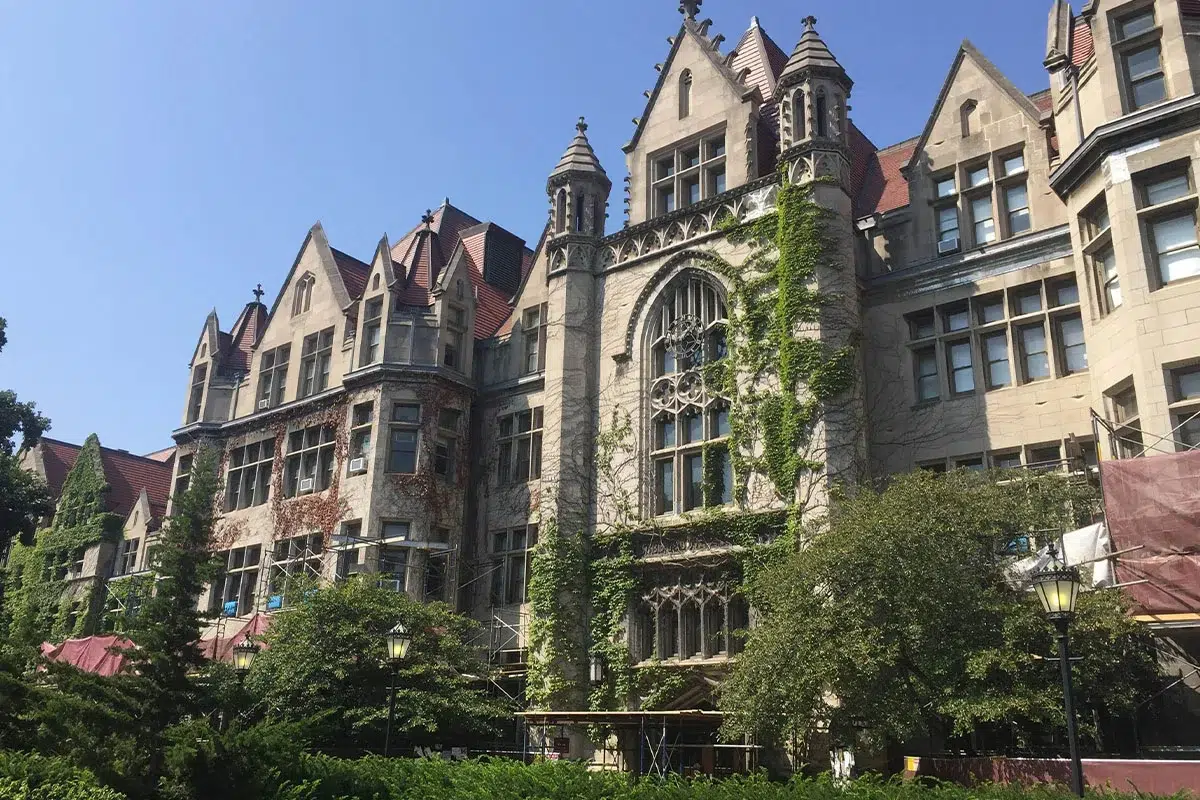
     Therefore, as you might’ve guessed, I arrived at the University with high expectations. My head was ringing with visions of school-wide scavenger hunts, bizarre class lists, and professors who re-enact papal elections — complete with costumes, assassinations and alliances — below the gothic spires of Rockefeller Chapel. The University of Chicago, with its traditions, quirks, and eerie resemblance to a certain wizarding school, had become almost magical in my mind.

    I realized, after my first few weeks, that the true magic in University of Chicago wasn’t in these grand traditions and wacky classes.  While seeing the entire school grumble out of bed at 6 am every frigid winter morning for Kuvia was astounding to say the least, what really made UChicago special is the people. Everyone has something to teach you, and they’re always excited to learn new things. They’re also incredibly passionate about their interests, so small talk isn’t something that’s heard often on campus.

     These diverse passions and backgrounds really come into focus during core classes. UChicago’s core is a set of requirements across disciplines, from the arts to the physical sciences to civilization studies, aimed at instilling a broad renaissance education into their students, ensuring that no matter what they choose to pursue, they have a myriad of perspectives to draw on.  These classes are also great for building community, for example, every first year is required to take a humanities class, which is limited to first year students. In these classes, students from all around the world, majoring in everything from comparative literature to Chicago studies, discuss primary texts and their effect on society. I learnt so much in these discussion based classes as it wasn’t just the professor that I was learning from, but the rich dialogue created by the diversity of perspectives in the classroom.  The professors are always happy to help out, and much like the students, are usually conducting research into something remarkable (one of my professors, for instance, specialized in puppeteering practices in Afghanistan) that they’re always eager to talk about in office hours! The core was a fantastic way for me, as a bio major who loves literature, history, and theatre, to maintain my interests in college and still (hopefully) achieve my professional goals. In high school, I would email hundreds of professors for research opportunities, and never get a response. I expected finding a lab to work in to be just as hard in college, but to my surprise, the first five professors responded to me immediately, and within the week, I had a research position at a tissue engineering lab that I’m still working in now!

     The university is located a short hop away from downtown Chicago, which is easily accessible (by Uber or the train or a long-ish bike ride) for a quick brunch or shopping trip. Chicago is an amazing city, and as someone who lives for food, I love how no matter where you go, you’re assured to find a delicious and wide variety (even on/near campus)! The university has gained a reputation of being where fun goes to die, in terms of academic rigor. While classes are certainly not easy, the university does offer resources that help, such as the Harper core tutors. Moreover, while Greek life isn’t as big as it is at most public universities, it is still a large part of the UChicago community. Making friends is also not as hard as I expected it to be. The university assigns you to a ‘house’ based on what dorm you’re assigned, and you can eat with them, go on house trips (to see the Chicago Bulls for free, for example) with them, or just hang out with them in the house lounge for a study break (usually with fun snacks)!

    UChicago was the perfect fit for me, as someone who loves learning, no matter what the subject (well, perhaps not physics), and wanted a college experience within a city environment. I also love to read, which I would say is quite important as some core classes can be quite text-heavy. What I love most about the university is that intellectual vitality that they prize, and that lives on in every student, professor, and TA on campus. It shines through everything from the snippets of conversations about quantum computing and Egyptology overheard on the quad to the school wide traditions like Scav, where one year, students built a functioning nuclear reactor. I’ve also made friends who I feel like I’ve known all my life, who understand me on a different level, who I learn from everyday. From the classes, to the professors, to the city itself, I can easily say that there’s no better school for me.

    We know what it takes to get into the top 100 colleges and working with study abroad consultants, overseas education consultants, or, as more commonly known, college counselors, can help you plan ahead and make those high school years count. Ivy Central offers exceptional focus to help you prepare for college admissions throughout the high-schooling years. Start today!