
Should I study for a Psychology Degree?
Have you ever looked up at the clouds and seen animals in the shapes, or wondered why you catch somebody else’s yawn, perhaps you have felt sudden pangs of hunger as you have walked past a fast food outlet? If that sounds like you and you are interested in why you do these things, then maybe a degree in psychology is for you!
What is psychology?
Examples of psychology can be found everywhere, from conforming to societal norms to the typing symbol on WhatsApp, intriguing us and ultimately keeping us online longer.
Psychology focuses on understanding a person’s emotions, personality and mind through scientific studies, experiments, observation and research. By describing the behaviour of humans, and other animals, we are better able to understand and sometimes manipulate outcomes!
The applications of psychology are widespread, and as such, the subject has many diverse subfields, such as health psychology, developmental psychology, and forensic psychology.
What do you study in a psychology degree?
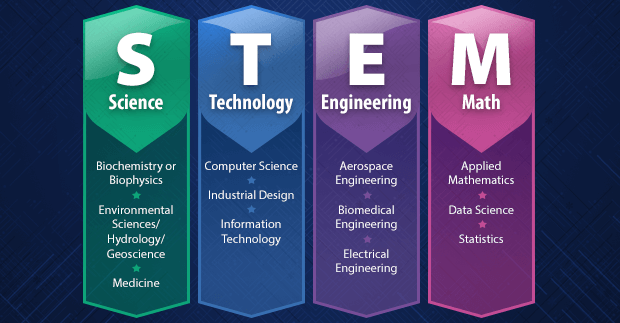
In a word, science. While not a ‘hard’ science degree like the physical science degrees, psychology very much has its feet deep into the STEM world, so you can expect to have studied subjects like biology, chemistry to a high level while at school. Another area that you will need to demonstrate some skill in is maths, particularly statistics.
Psychology uses statistics to make sense of vast amounts of data and to understand its relationship to other pieces of data, even when those data points are tiny. While much of this statistical analysis can be done using statistical software, it is still important that students studying psychology have a good understanding of the field.
As a science degree, you should expect to cover topics relating to the scientific method, but you will also get to explore areas such as developmental, behavioural, social, and cognitive psychology. As you progress through college, courses become more specialised. You might take courses on psychology as it relates to relationships, media, or education. You should also expect lots of reading, in your coursework, you will be expected to back up the arguments you make. Psychology is also a field where new studies and ideas are frequently being published, so it is important to keep up to date with professional publications.
Is psychology a good degree for me?
A psychology degree is a good choice for students who want to work with people and are interested in understanding human behaviour and mental processes. Helpful skills for psychology majors include open-mindedness, critical thinking, problem-solving, and effective communication abilities. Therefore, this major is for people who can handle stress, social dilemmas, and high-pressure situations.
What can I do with a degree in psychology?
Having an understanding of human thought, behaviour, development, personality, emotion, motivation, and more can give you insight that is valued across many different careers within psychology itself or more often in an almost endless number of other career areas.
Professional careers in psychology: These will normally require you to go on to gain postgraduate qualifications before becoming licensed, in the US, or chartered, in the UK.
If you intend to work in the US, it is important to know that each state has its licensing requirements that you must meet. That said, typically you will need to complete a master’s, or more frequently, a doctorate in psychology. In addition, you should expect to gain work experience in a related field together with at least one year’s post-doctoral experience. Having met these requirements, you must pass the Examination in Professional Practice in Psychology (EPPP) and any other requirements of the individual state before being awarded your licence to practice.
For the UK, having completed your degree, it can take a further five years of experience and further training before you can call yourself a Chartered Psychologist. After their degree, students wanting to gain chartered status will complete an accredited doctoral degree before doing further training and supervised work experience.
If gaining professional status is for you, there is a wide range of psychology careers to train for, including:
-
Clinical psychology
-
Therapist or Counsellor
-
Educational Psychology
-
Sports and Health Psychology
-
Occupational Psychology
-
Neuropsychology
Other careers where a psychology degree can be helpful
-
Human Resources
-
Social Worker
-
Probation/Correction Officer
-
College/Career Adviser
-
Teacher
-
Marketing
-
Public Relations
Top colleges and universities for psychology
Psychology is one of the most popular degree courses in both the US and Europe so you should be able to find one that fits your needs. According to the QS World Rankings the universities with the top psychology courses are:
-
Harvard University
-
Stanford University
-
University of Cambridge
-
University of Oxford
-
University of California, Berkeley
-
University of California Los Angeles
-
University of Central London
-
Yale University
-
Massachusetts Institute of Technology
-
University of Michigan – Ann Arbor